
First ferns, now succulents? I am trying to branch out and look at plants outside of my comfort zone. This is typically a more southernly plant and Monterey County is about as far north that it grows naturally. Does anyone have a good dudleya ID site to recommend?
Sunday, February 20, 2011


 California maiden-hair
Adiantum jordanii
Pteridaceae
If I had a garden of my dreams, this is the one native fern I would definitely include. I suspect it would require quite a bit of moisture and could be challenging to grow in an artificial setting. That's Garland's waterfall in the background of the third photo, which had water running after a week of decent rain. Interestingly enough, this is not CA's only maiden-hair fern; there's another called southern maiden-hair (Adiantum capillus-veneris) that looks a lot like cilantro, the herb staple of many salsas.
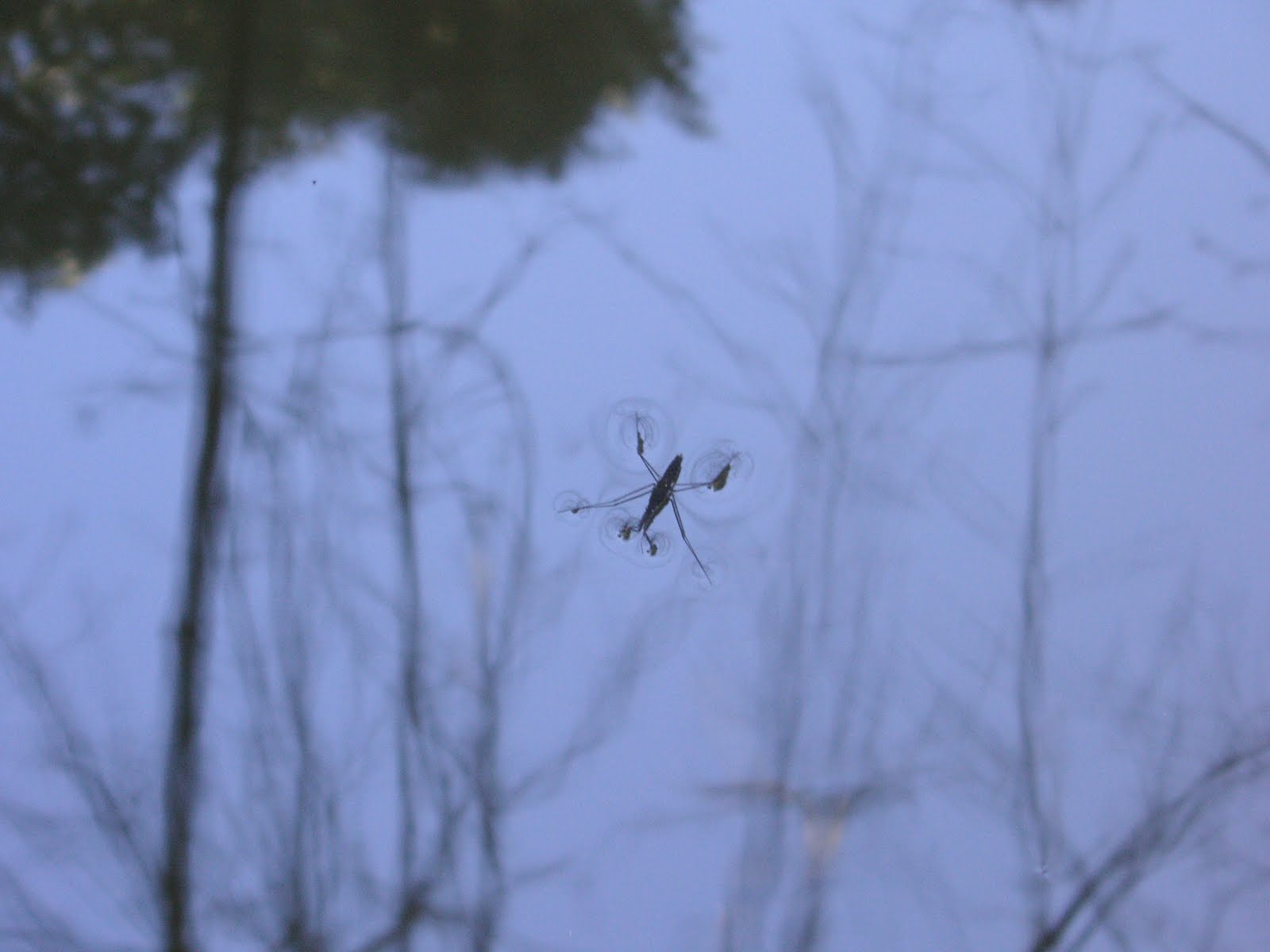
If you didn't know what you were looking at, I think many people's brains would have a hard time making sense of this image. I took about 30 pictures of this true bug on a pond surface with a reflection of winter trees in the "background." Shown above is the best shot I got. I'm tempted to post another pic under the label crappy photos.
While Aquarius remigis (also formerly known under the genus Gerris) is generally agreed to be the most common water strider in CA and the U.S., I'm hesitant to place a positive ID considering my picture doesn't show enough details, nor did I take the time to physically capture this insect to bring home and examine the relative tarsal and antennal segments under my scope for proper keying. Powell and Hogue state there are about 10 species of gerrids in CA; indeed, UC Berkeley's Essig Museum of Entomology lists 12 species in their Heteroptera PDF.
While Aquarius remigis (also formerly known under the genus Gerris) is generally agreed to be the most common water strider in CA and the U.S., I'm hesitant to place a positive ID considering my picture doesn't show enough details, nor did I take the time to physically capture this insect to bring home and examine the relative tarsal and antennal segments under my scope for proper keying. Powell and Hogue state there are about 10 species of gerrids in CA; indeed, UC Berkeley's Essig Museum of Entomology lists 12 species in their Heteroptera PDF.


I haven't spotted a saxifrage in a very long time, actually not since March 14, 2009 at Fort Ord. The blurry second pic with my hand is to show just how tiny these flowers are and why they can be easily overlooked. Indeed, this was one flower that was not included in the Garland Ranch Visitor Center's current blooms display, despite the fact they were feet away from the only spot of Padres' shootingstars we saw during this hike. The shootingstars were also mentioned to us from a friend we ran into who regularly volunteers at Garland - Hi, Andy! - not my Andy, but a female Andy. I love the delicate combination of salmon colored anthers of the California saxifrage with the bright green ovaries (they look like they're split in two) and enveloped in white petal folds. Can you tell I've been refreshing my memory on flower parts?