Tuesday, December 21, 2010

turkey tails ~ 12/21/10 ~ Mt. Madonna

turkey tails with banana slug
Trametes versicolor with Ariolimax sp.
more information

ps 09/03/11 - I originally posted this in another initial post.

waxy cap ~ 12/21/10 ~ Mt. Madonna


waxy cap with coast redwood needles
Hygrocybe sp. with Sequoia sempervirens needles
more information
Cupressaceae

Oh my goodness, this was one of the most challenging posts on Nature ID! I know next to nothing about fungi, except that I like eating those button mushrooms from the grocer when sauteed in butter. Funny enough, I had a sudden craving for mushroom soup, similar to whenever I spy a crab and have a hunkering to eat crab.

It's taken me a couple days to sort through my hundreds of fuzzy fungi pics. Rain, dark forest lighting, and not being as steady as I could be after hiking up and down hills, versus a leisurely stroll, made for poor quality photos. I picked the best pics to post here.

I'd certainly appreciate any ID help from anyone out there. Whenever I could, I've embedded links above to the 3 best online fungi ID sites I've found so far: Mushroom Hobby, The Fungi of California, and Mushroom Expert. For additional pictures, I'm also posting to Flickr.

ps 01/01/11 - Thanks to John Wall, I've edited, corrected, and added to the above IDs. He has an incredible photo set on Flickr called the Mt. Tam Mushroom Project. Mt. Tam is a couple hours further northwest than Mt. Madonna, but both places seem to have similar habitats.

ps 09/03/11 - I'm separating out these pictures, so each fungus has its own entry. They can be seen in newer entries to this one from this hiking date, or check out * all fungi.


Pacific madrone
Arbutus menziesii
Ericaceae

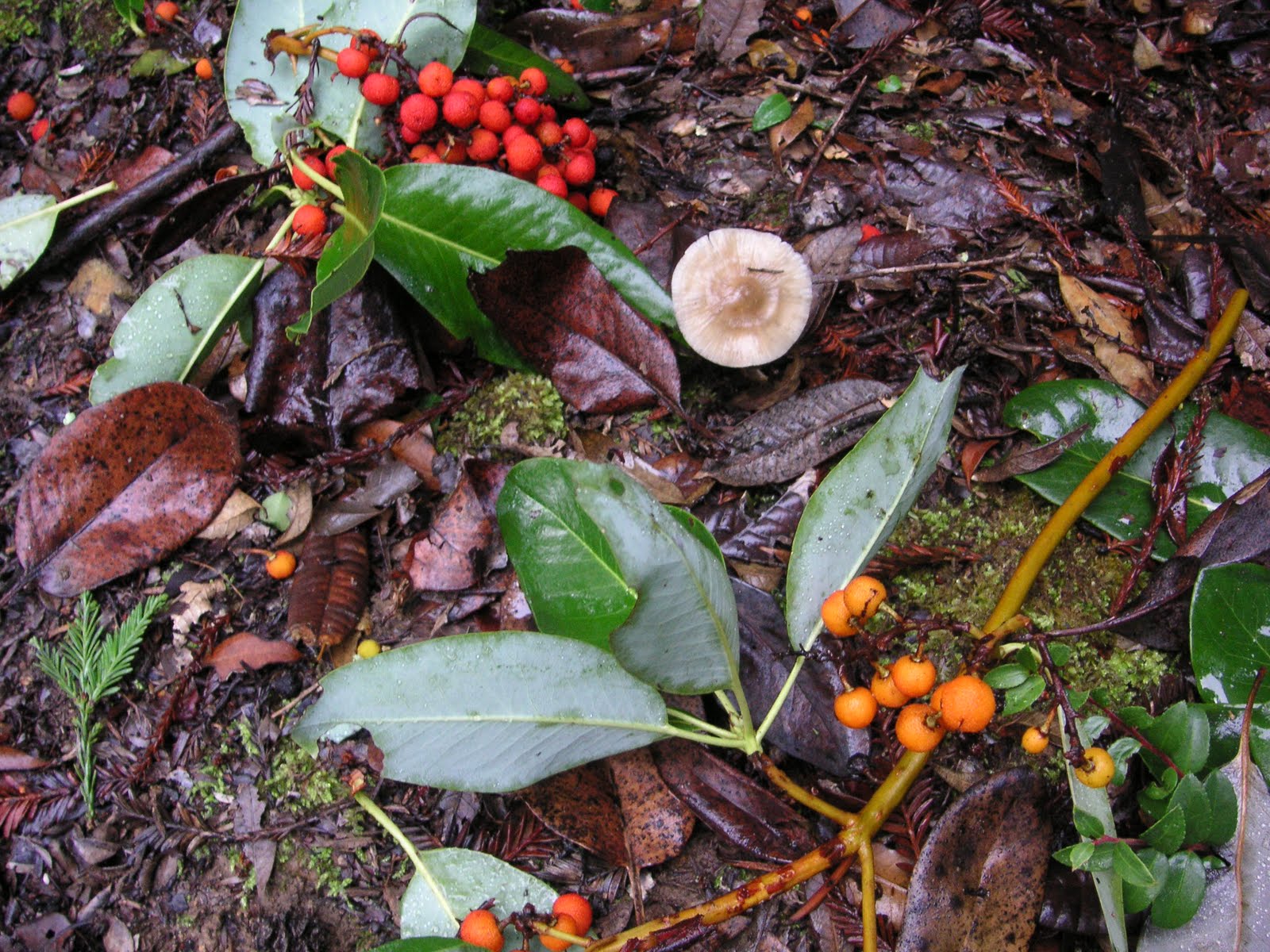
This looks Christmas-y, right? I was amazed at how prolific the Pacific madrones were up on the mountain. Red, orange, and yellow berries were everywhere, in the trees and on the ground. I ate one just to try it out. Not too bad... it had the taste and texture of a not very sweet, ripe strawberry, but with a whole lot of seeds on the inside. I'm not going to become a madrone eating freak anytime soon, but it's good to know in case I ever need to "survive" out in the wild. Oh! There's an unidentified mushroom in the last pic, but I'll get to my numerous 'shroom pics after the holiday.

I hope everyone has a wonderful Christmas day, whether you celebrate it or not.

ps 12/24/10 - I'm not the only one who has tried the berries. See Rooted in California's foraging post. It seems many regionally local nature bloggers have noticed the profusion of madrone berries this year.

banana slug ~ 12/21/10 ~ Mt. Madonna


banana slug
Ariolimax sp.

It was total slugville underneath the redwoods and madrones at Mt. Madonna in the gentle rain. I easily lost count of how many native banana slugs we spotted during our hikes. True to my blog rules, all of these unedited pictures were taken on 12/21/10. They're fairly camera shy and quickly retracted their optical and sensory tentacles as we walked up to them. It took more patience than I generally have while waiting for the tentacles to reappear for the first photo above. Many of the banana slugs were longer than the span of my hand, from thumb to pinky, i.e., > 7". Most appeared to have egg masses sticking to their tail ends. Or it could have been the mucous/slime plug I've read about?

I was hoping to be able to ID the banana slug to species, but my numerous internet searches didn't offer any information on how to distinguish between Ariolimax columbianus (Pacific banana slug), A. dolichophallus (slender banana slug), and A. californicus (California banana slug). Color does not seem to be an identifying trait as they can be white, black, brown, or varying shades of yellow, all with or without spots. Not even my Field Guide to the Slug had any identifying information within the Ariolimax genus. However, I did find more sites about slug sex than I ever wanted to know.

For more information, click on any of the embedded links above, or check out a favorite local blogger's very nice summary of banana slugs at Curbstone Valley Farm. If anyone has better information, I'd love to hear from you.