Themidaceae (formerly Liliaceae)
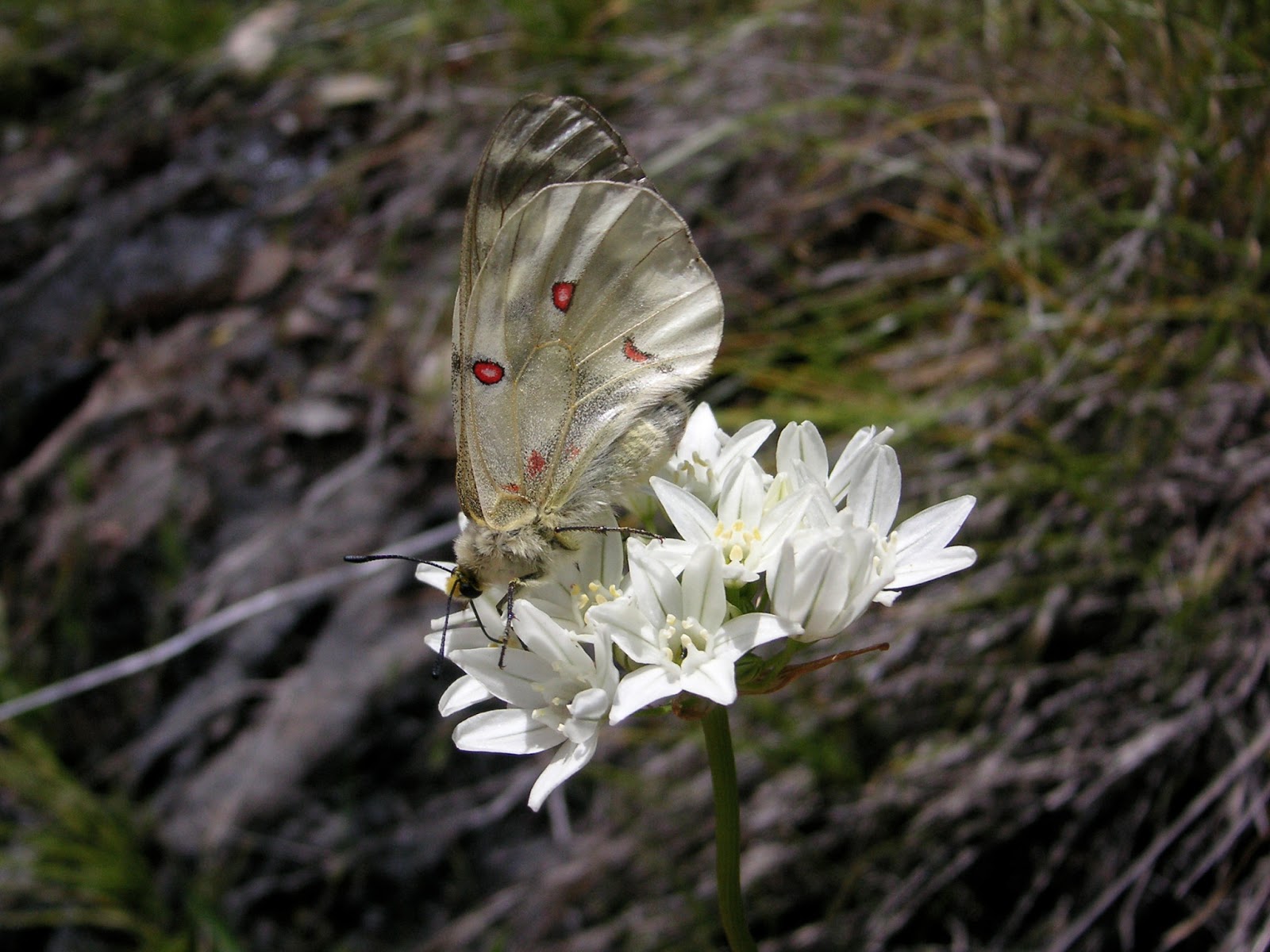
Isn't it pretty? Those red spots make me want to pull out my art markers and draw butterfly spots. When I first saw
Parnassius about 15 years ago in the Ohio museum collection where I worked, I initially thought someone had grossly misfiled the drawer in the swallowtail (Papilionidae) cabinet. I figured they should be with the whites and sulphurs (Pieridae). Wrong! They are somehow classified along with swallowtails but in their own subfamily
Parnassiinae, aka apollos. After looking at the pinned labels and discovered none were found anywhere near OH and several were collected in CA, I wished I had become more familiar with butterflies before I had left my home state. Not thinking I would ever return to CA at the time, I was a little sad at the prospect that I'd probably never see one on the wing. Wrong, again! When Dr. Shapiro mentioned we might spot early seasonal individuals of this high altitude butterfly, I got very excited. There used to be ssp.
strohbeeni in the Santa Cruz Mountains closer to home, but it is now assumed extinct. Sure enough, there were numerous
P. clodius ssp.
sol fluttering about along the South Yuba River. Yeah! I was amazed at how large they appear. This one looks very fresh and notably still slightly crumpled in the wing. As an additional note, it seems whenever
Parnassius are mentioned, the butterfly version of a "closed for business" sphragis is also mentioned. For great pictures and a brief discussion of what this means,
check this out.
As for the white brodiaea, I kinda surprised myself at how easily I tracked down its ID. Closer to home the
coast pretty faces have made an incredible showing this year, and these white flowers reminded me of them as well as
dwarf brodiaeas. I guess I'm getting slightly better at recognizing related plants.