Squee! I thought I had died and gone to newt heaven. With 4 days of decent rain, we had high hopes in finding newts. And, we did. A couple hundred of them. Yes, hundreds. I stopped keeping track of count after a few hours. We must have hit the timing jackpot, because I don't believe sightings like this are typical. Or maybe they are? This year's winter has been so wacky with the lack of rain, that the newts may not have been very active before now. Many looked like skin and bones, with tiny little hips sticking out, and yet just as many others were quite plump and very healthy looking. Lots of thanks to
Cindy @ Dipper Ranch for getting us bloggers together for this excursion.
If left to my own amateur ID skills, I would have said the above two newts were both CA newts. Many
online pictures show rough-skinned newts as being much darker, practically a charcoal color, with the area under the eye also quite dark.
Ken @ Nature of a Man suggested the ones we found may be
intergrades.
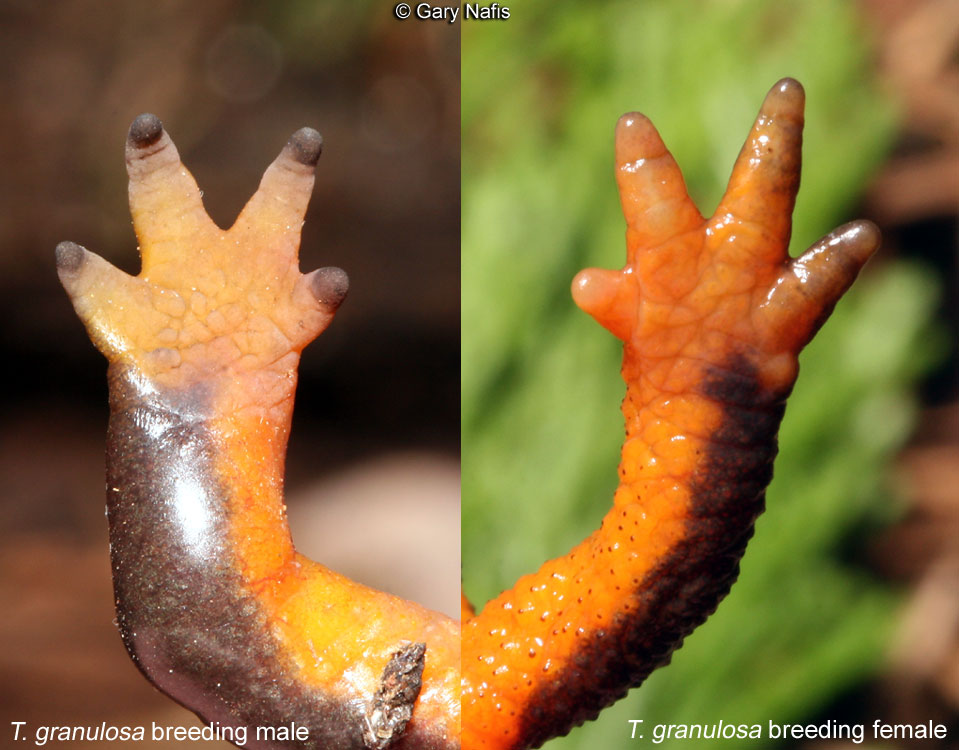
Hybrids? With so many newts around to compare, there was quite a bit of subtle variation in how much the eyes bulged and combinations of coloring (mustard yellow to cheddar orange to chocolate brown). As I picked up several, I noticed an immediate tactile textural difference. Those that felt rougher indeed had slightly darker coloring under the eyes; perhaps that's how they got their name. I honestly don't know if the way they feel in the hand could be considered diagnostic, because I haven't handled that many newts before. Plus, we found newts in many different stages, from itty-bitty 2 1/2" (head to tail tip) juveniles to hefty males with, eh-hem, bulges.
Check out Gary Nafis' California Herps for the best side-by-side Taricha spp. comparison.

How many newts?
Answer: 3. Only after one or two had been pointed out to me did I begin to recognize their movement in the douglas-fir leaf litter. Pretty much they plod along on their little legs, but they will freeze momentarily
when approached. I can see why some parks will close roads for newt
crossings. They're perfectly colored to blend in with their surroundings and are not easy to spot. I'm guessing I've passed many newts during my hikes and simply have rarely noticed them before. Sadly, they're
collected for the pet trade as "Oregon newts". Along with the
convergent lady beetles, this was yet another reason for our discussion about the implications of sharing nature finds online. Hey, I'm not giving out trail names or GPS points, so collectors can hike around just like everyone else to maybe find them. They'd better be in good shape.

A 5th leg!
Given the number of newts we found this day, the chances of finding a mutant were good, obviously considering we found one. I don't understand how mutations work in newts. Does it originate in the egg? Or does it happen sometime when transforming from aquatic larva to terrestrial adult? How much does the quality of the environment affect newts? Or even an accident later in life? Apparently, they're able to
regenerate lost limbs. These are definitely animals I want to learn more about. Does anyone have a recommendation for a good, scientific, but not too dry, newt book?