Showing posts with label lace lichen - also. Show all posts

Sunday, April 6, 2014

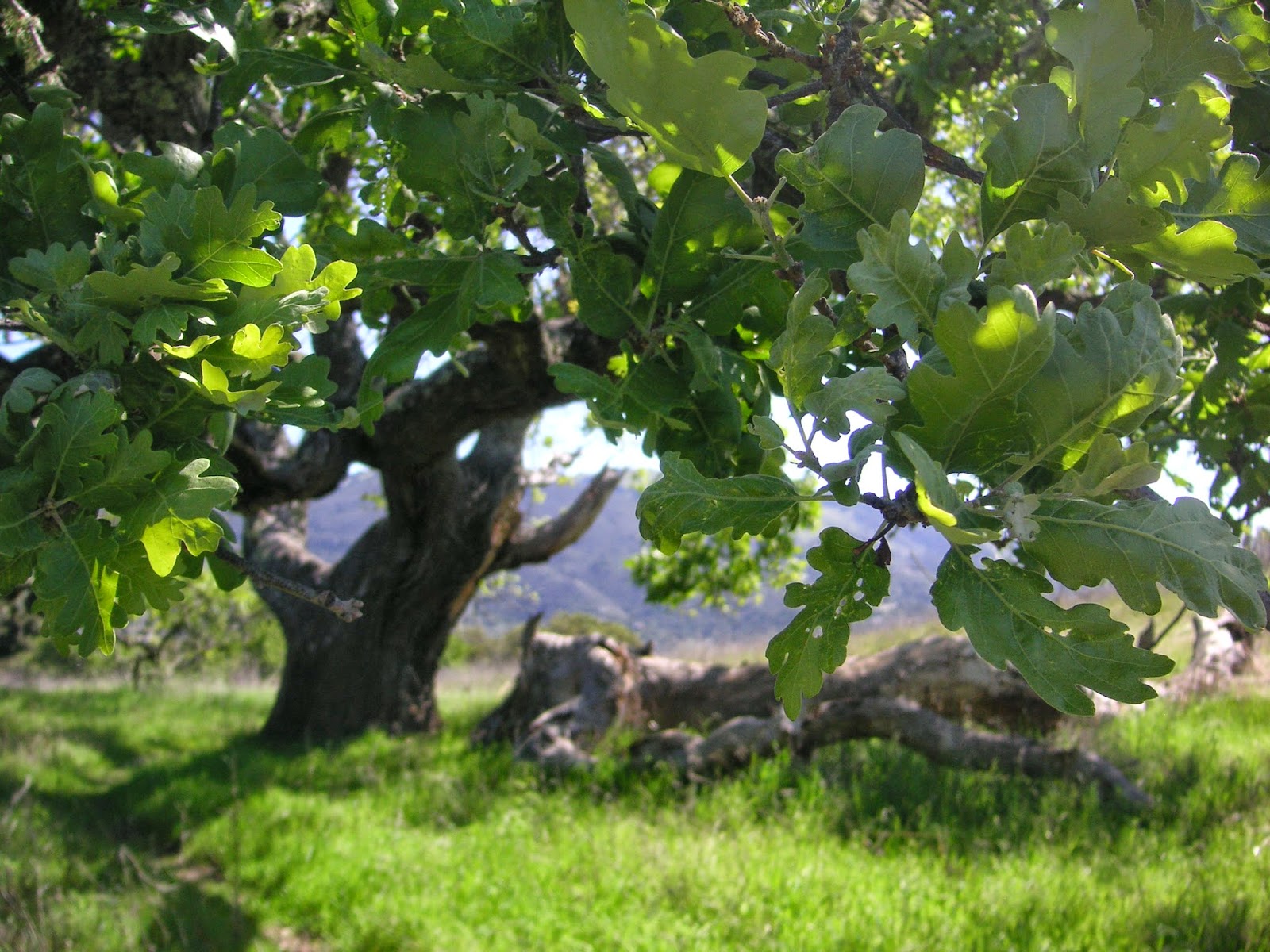
wedding tree ~ 04/06/14 ~ Garland Ranch


I think it's cool that Andy and I have made it a tradition to hike to our wedding tree on or around our anniversary.  It's not like we don't visit any other time of year, e.g., last November when it was dry, dry, dry or in February before the leaves come out.  It's been particularly interesting to look at my photos of this tree on an annual basis, showing variations in the timing of spring leaf-out and subtler, annual changes as the tree ages, not to mention the weather (it snowed on us in 2011!).  This year, the leaves were fairly progressed; some had already toughened up and were very shiny like typical summer leaves.  The last time it was anywhere near this leafy on our anniversary was back in 2010 when the catkins were still hanging on.  I don't know what's going on with the swath of no leaves in the last photo.  There's a patch of lace lichen there that hasn't spread much over the years, and supposedly it doesn't hurt the tree.  Also, notice how much greener the grass is in the shade of the tree versus out on the sunny hilltop?  What's that phenomena called?  It's as if mature oaks create their own personal water cache through their own shade.  Since we share this tree with other visitors to Garland, we also take note when other people leave their mark, in this case, a heart painted with... chocolate and vanilla pudding?  Cheers!

Sunday, March 20, 2011

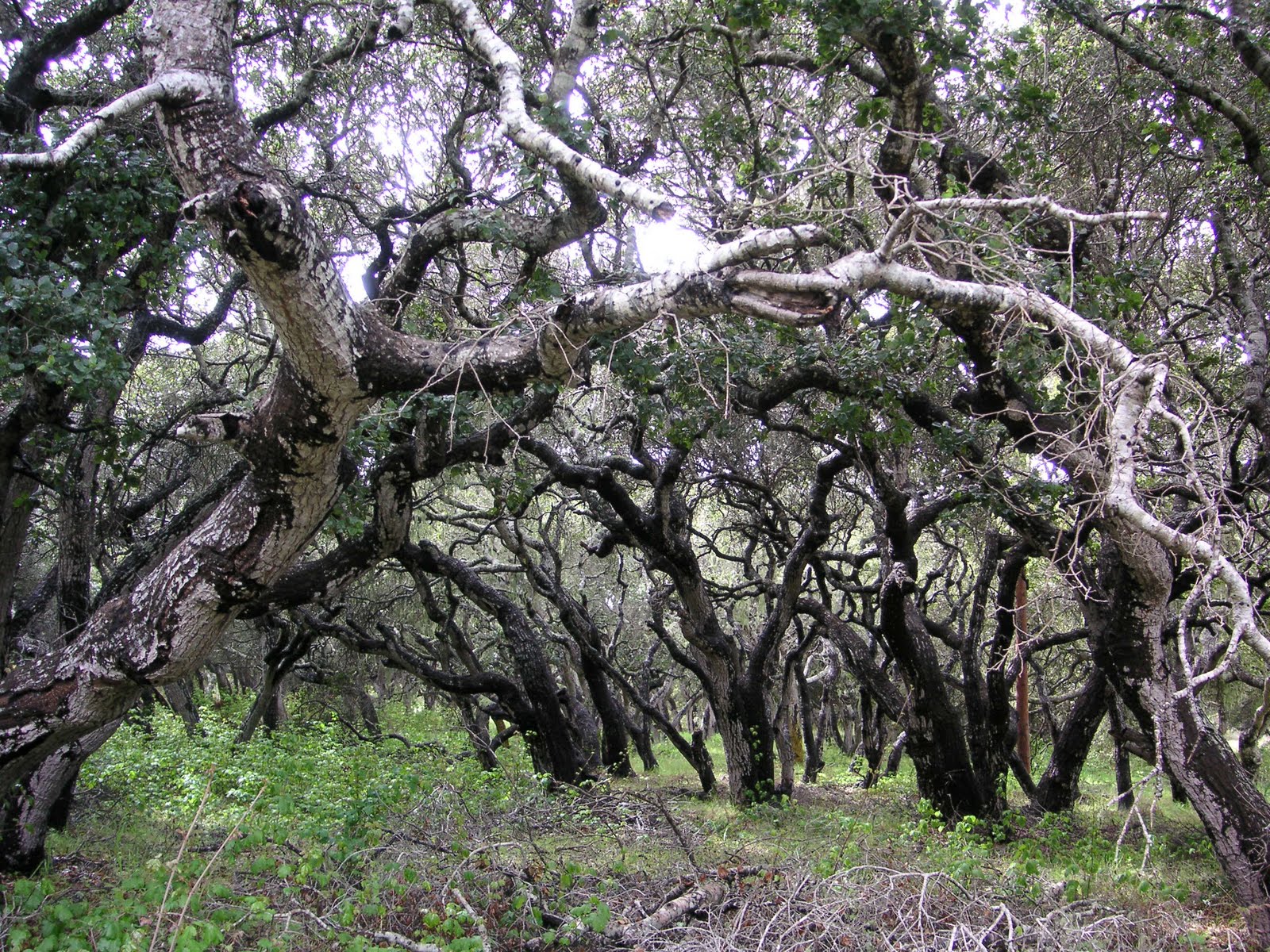
coast live oak ~ 03/20/11 ~ Fort Ord


older coast live oak with lace lichen
Quercus agrifolia var. agrifolia with Ramalina menziesii
Fagaceae

posted 03/25/11 - This is the best ID you're going to get from me this morning. I wasn't feeling well during the night, which makes for an unpleasantly grumpy Katie. Add to the fact that I have difficulty identifying most trees.

I need help. Can anyone ID these and help me name the flower-ish parts? I think I have at least 2 different live oaks shown above... possibly. I can't imagine the first two pics are the same species as the last two pics. Either one is, at least I believe, coast live oak (Quercus agrifolia var. agrifolia). There are 7 species/subspecies of oaks recorded for Fort Ord and I'm too tired to figure out which ones are which. Three species in the list are called "live oaks": Quercus agrifolia, Q. chrysolepis, and Q. wislizeni. If you're curious and look at my embedded links, you'll see the subspecies look very different, with some having smooth leaf margins and others having jagged leaves.

I plant to edit this post with better information once I feel a bit better.

ps 03/28/11 - I originally posted this simply as live oaks, meaning oaks that keep their leaves throughout the year. After much help from commenters below and searching online, I've finally decided both sets of pictures are of the same species but different ages. Having looked into douglas-firs and Monterey pines, I know trees can change shape considerably as they mature. I found Cindy's comments below (of the Dipper Ranch blog fame) to be very informative. Also, Hastings Reserve and Las Pilitas Nursery have great keys and information about oaks specifically found in Monterey County and California. The next time I'm out at Fort Ord, I'll do my best to check the leaves, but I'm fairly confident of these IDs now.

Saturday, August 21, 2010

habitat ~ 08/21/10 ~ Fort Ord - BLM Creekside

August 21, 2010

During this hike, it felt like I physically moved from spring, to summer, to fall at Fort Ord in one day.

The first photo above has a great egret (Ardea alba), which is more closely related to the great blue heron (Ardea herodias) than it is to the snowy egret (Egretta thula). I still get the common names mixed up, since there's also a white form of the great blue heron, called the great white heron. Mainly what I want to show in the first pic is how much water is left in one of the vernal pools this late in the year after the winter and spring rains. It's been so drippy wet foggy here on the coast the past month that I'm not surprised there's still standing water. We've been wondering at what point does the heavy fog officially become precipitation.

The second pic is classic CA summer grassland, dry and yellow almost as far as the eye can see. The heat and dryness are the main reasons why I don't hike out there much this time of year.

The last pic is of CA buckeyes loosing their leaves for the year. This is about as 'fall' as it gets around here. There's still "Spanish moss" on the oaks, a local term that is not the real Spanish moss. Really, what we have is not moss at all, but a lichen called Ramalina menziesii. Interestingly enough, within 10 feet of this picture, there was one lone lupine shoot making a bloom. I'm sorry to not have taken its photo to show.

ps 02/16/11 - For a great post on our local lichen, check out Curbstone Valley Farm. And, recently while we were watching a PBS show on snub-nosed monkeys, I found it interesting that they eat lichen. Their big lips and snowy habitat reminded me of cartoon depictions of the abominable snowman, aka yeti.

Saturday, April 8, 2006