Saturday, February 12, 2011

sunset ~ 02/12/11 ~ Asilomar State Beach


sunset from Asilomar
February 12, 2011

This was one of the last warm and calm days before the storms hit. I should mention those dogs are not ours. Asilomar to Spanish Bay in Pebble Beach is a dog friendly beach. If you go past the State Beach boundary signs, you can also have a beach fire. I've always wanted to do this, however, the thought of lugging piles of wood over sand and having to haul everything back out after dark has kept me from going for it. It's one of those things you want to do with a group of friends. Getting people's schedules coordinated with last-minute nicer weather is another thing entirely.

tree year project 2011, #3


coast Douglas-fir
Pseudotsuga menziesii var. menziesii
Pinaceae

So, it looks like those little green bits from my last post for The Tree Year project are indeed new needles (nope, see postscript below). Today was the first time this year I noticed miniature cones starting to pop down from the branches. The second pic is to show what a great view this Douglas-fir enjoys of the Monterey Bay with decorative sailboats on sunny days. I guess I should mention those upward looking branches in the background on the right are a set of 6 different Monterey pines that have grown, I swear, at least 15 feet in the past 5 years. Our once expansive view of the bay is quickly being overgrown with views of trees.

http://thetreeyear.wordpress.com/tree-year-posts/about-the-tree/buds-and-flowers/

ps 08/08/11 - Correction! Now, I think the light green fluffy bits are female cones and the downward yellowish buds are male pollen cones. Apologies if this is confusing, but I'd like to keep what I originally wrote to show my learning in progress.

Friday, February 11, 2011

habitat ~ 02/11/11 ~ Jacks Peak County Park

Jacks Peak County Park
February 11, 2011

posted 02/19/11 - I think this will be the last post for this hike at Jacks Peak. I have more photos but nothing extraordinary to share. It's Andy's favorite destination to trail run from home. Yep, he regularly runs 7-15 miles several times a week; I don't usually run... I prefer to do other things. It's great in that he finds hidden, non-mapped trails and then shows me. I prefer parking on one of the lower roads like Aguajito and then hiking up. Jacks is the highest peak on the Monterey Peninsula. Truth be told, most of the ID pictures shown below are from outside of the park boundaries. We're still not sure who owns the land that we use and appreciate so much. The trails to the park are often used by horse riders. The park itself is a classic county park with running water, bathroom facilities, big fields of lawn, bbqs, and picnic tables. The trails within the park are fairly flat and some have incredible views of both sides of the peninsula. Even after almost 8 years of living here, I still get turned around on the peninsula. Based on older pics of the Bay, this looks like it's above and to the west of Huckleberry Hill, consisting of the same Monterey pine forest.

Monterey pine ~ 02/11/11 ~ Jacks Peak

male cones with pollen

old female cones

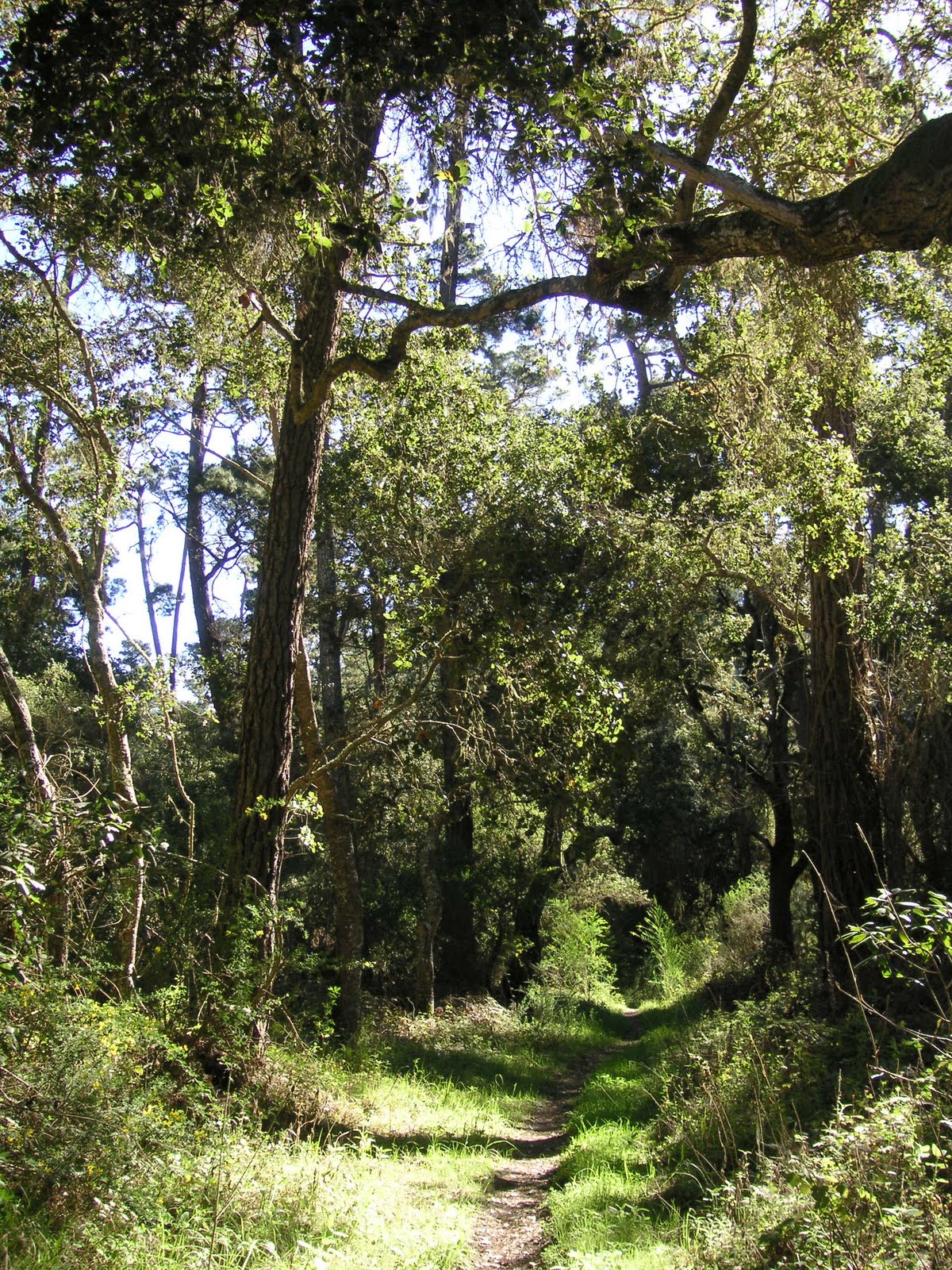
pine trunks in native habitat

Monterey pine
Pinus radiata
CNPS 8th Edition Inventory
for more information click here and here
Pinaceae

posted 02/19/11 - If you click on the first photo to enlarge it, you may be able to see the yellow pollen borne on the air to the right of the pic (no, that speckly stuff isn't due to my poor photography skills). During the last week of January, we noticed the thick annual pollen dusting on many parked cars - I wonder if there's some kind of electrostatic charge that particularly attracts pollen to the metal and glass of cars. There are many species of trees in the area, so I don't know if I can blame the Monterey pines for our non-stop runny noses. The recent rains do seem to help alleviate the allergies.

While the Monterey pine tree has been introduced around the world for lumber, apparently, the Monterey Peninsula is one of the few remaining places of native forests; it's actually considered a rare and endangered plant in California. I do find it interesting how the shape of the tree changes as it ages, from a traditional triangular Christmas tree shape when it's younger to a tall, rounded top shape once they mature.