Showing posts with label * catkins. Show all posts

Saturday, August 4, 2012

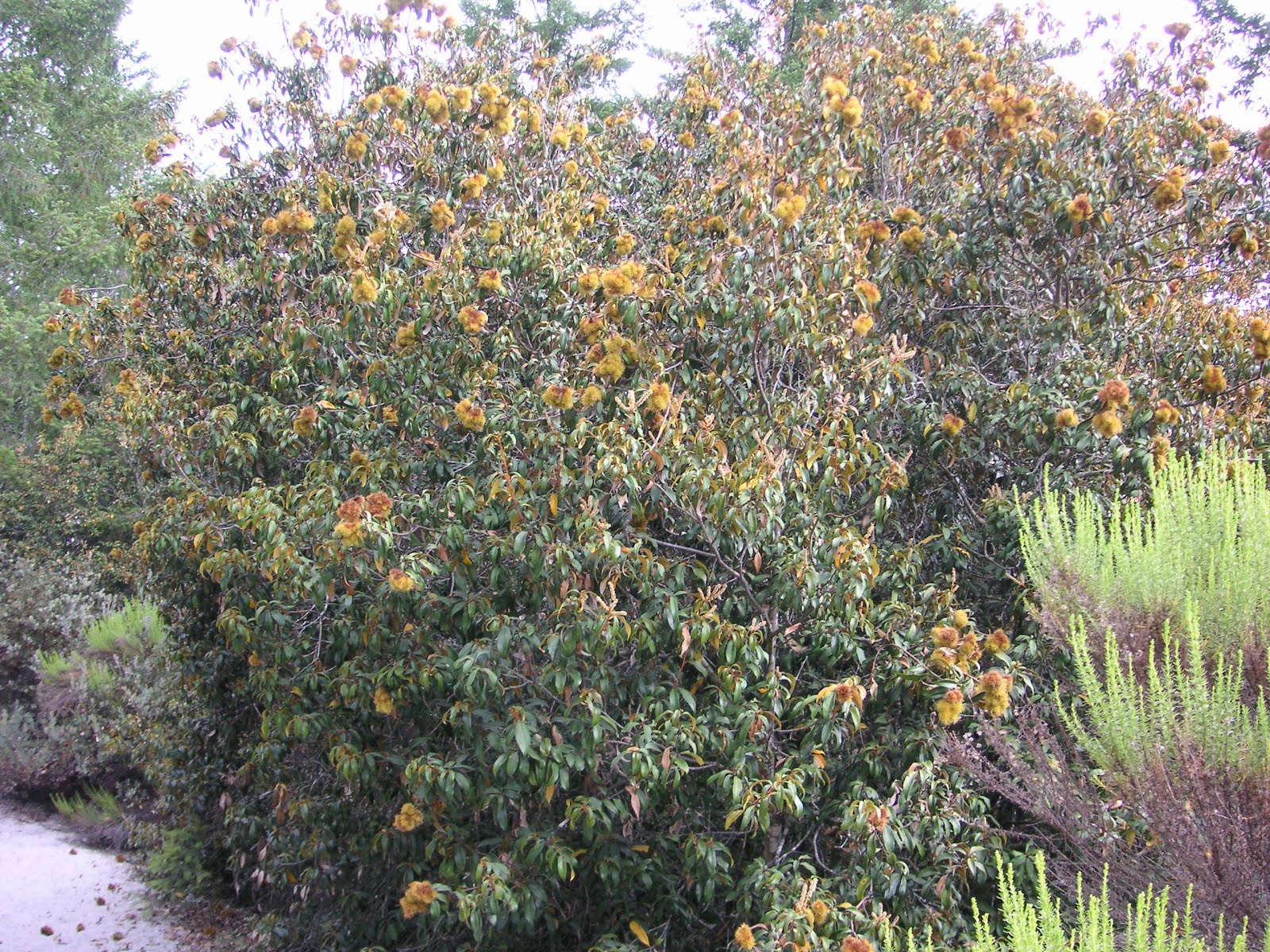
golden chinquapin ~ 08/04/12 ~ Henry Cowell Redwoods


posted 08/06/12 - Chinquapin. I'm amazed at the various pronunciations of this word, just like I was surprised at how quinoa is inconsistently pronounced. The etymology of chinquapin supposedly has an Algonquian reference to chestnut.

Unfortunately, I will now always associate the word with inexplicable mass shootings. Why? On our way home from camping at Mt. Madonna on Friday, July 20, with thoughts of blogging about the pictures of chinquapins that I took there, we heard on the radio of the mass shooting in a Colorado movie theater. Then, yesterday morning Sunday, August 5, as I was about to blog on the pictures shown above, I found the news of another mass shooting at a Sikh temple in Wisconsin. What is wrong with people!?! Add in the current chaos in Syria, and I barely want to go online to check e-mails, blogs, or Olympics upates.

Nature is starting to cease being a comfort to me. I can't seem to bury my head in the sand deep enough. I can feel the currents of tension in the air. It is filled with sadness and grief. Chinquapin.

Sunday, March 18, 2012

Pacific willow ~ 03/18/12 ~ Frog Pond

Pacific willow
Salix lasiandra (aka Salix lucida ssp. lasiandra)
Salicaceae

This is a large shrubby plant with some surrounding shrubs already with leaves out. This section of willows was found on the opposite side of the pond from the observation deck. I'm waiting to hear back from a CNPS member to double-check the accuracy of this ID. Our local Monterey Bay Chapter recently updated their published lists, and I think there may have been a mistake in the name changes that have occurred with Salix. I'll update once I know more.

ps 03/23/12 - I was in such a rush to post as we headed out camping that I didn't take as much time as I would have liked to look for a proper ID. As a quick cheat, I referenced an older saved CNPS Frog Pond Wetland Preserve Checklist and then compared it with the new 2012 version. In addition to arroyo willow (S. lasiolepis), the older version states yellow willow (Salix lucida ssp. lasiandra), the name of which has since been changed to S. lasiandra var. lasiandra. The newest checklist states yellow willow (S. lasiandra var. caudata), which according to both Calflora and Jepson is only found in the eastern part of CA nowhere near Monterey County or any of the surrounding counties. To complicate matters, the name yellow willow is commonly given to S. lutea. Additional native willows found in the local Monterey area are narrowleaf willow (S. exigua), red willow (S. laevigata), Scouler's willow (S. scouleriana), and Sitka willow (S. sitchensis). Confused, yet? Me, too.

After looking at numerous CalPhotos (linked from the pictures on the Calflora embedded links above), I'm starting to think this might be the ubiquitous arroyo willow, even though the stems didn't have the yellowish to reddish color I usually associate with arroyo willows. I want to do another visit to the Frog Pond in a few weeks to check the changes in the catkins and leaves.

Sunday, March 20, 2011

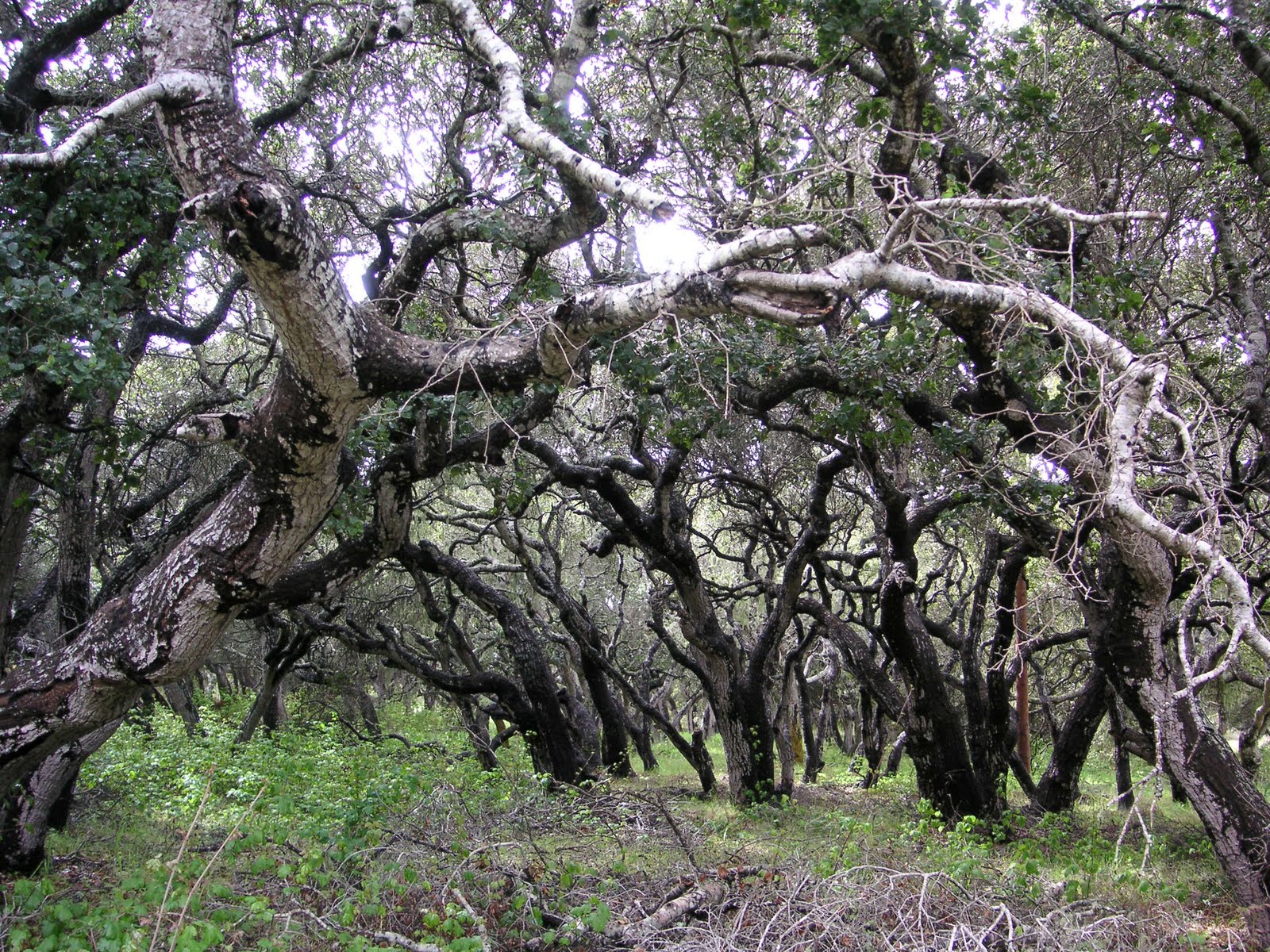
coast live oak ~ 03/20/11 ~ Fort Ord


older coast live oak with lace lichen
Quercus agrifolia var. agrifolia with Ramalina menziesii
Fagaceae

posted 03/25/11 - This is the best ID you're going to get from me this morning. I wasn't feeling well during the night, which makes for an unpleasantly grumpy Katie. Add to the fact that I have difficulty identifying most trees.

I need help. Can anyone ID these and help me name the flower-ish parts? I think I have at least 2 different live oaks shown above... possibly. I can't imagine the first two pics are the same species as the last two pics. Either one is, at least I believe, coast live oak (Quercus agrifolia var. agrifolia). There are 7 species/subspecies of oaks recorded for Fort Ord and I'm too tired to figure out which ones are which. Three species in the list are called "live oaks": Quercus agrifolia, Q. chrysolepis, and Q. wislizeni. If you're curious and look at my embedded links, you'll see the subspecies look very different, with some having smooth leaf margins and others having jagged leaves.

I plant to edit this post with better information once I feel a bit better.

ps 03/28/11 - I originally posted this simply as live oaks, meaning oaks that keep their leaves throughout the year. After much help from commenters below and searching online, I've finally decided both sets of pictures are of the same species but different ages. Having looked into douglas-firs and Monterey pines, I know trees can change shape considerably as they mature. I found Cindy's comments below (of the Dipper Ranch blog fame) to be very informative. Also, Hastings Reserve and Las Pilitas Nursery have great keys and information about oaks specifically found in Monterey County and California. The next time I'm out at Fort Ord, I'll do my best to check the leaves, but I'm fairly confident of these IDs now.

Friday, February 4, 2011

arroyo willow ~ 02/04/11 ~ Hatton Canyon


arroyo willow
Salix lasiolepis
Salicaceae

I wish I could identify this willow specifically. Mainly, I wanted to show the cheerful catkins as a sign of spring. I guess that's where the term pussy willow comes from, which to me refers more to the grey, fuzzy buds before the yellow flowers emerge.

ps 02/08/11 - While looking up other plants in the area, I discovered the arroyo willow is the only willow on record for this area. It seems to match my pictures above. I've made the correction to the species name above.

Thursday, April 8, 2010

wedding tree ~ 04/08/10 ~ Garland Ranch


wedding tree
Fagaceae

This oak has certainly changed its shape from 4 years ago. I believe more branches have broken off; however, the foilage was seasonally advanced compared to years past. And for the first time, flowers were blooming profusely, like I had envisioned when we set our wedding date. Purples and blues were everywhere in the form of blue-eyed grasses, vetches, fiesta flowers, lupines, Chinese houses, and blue dicks. I plan to post additional ID'd pics later.

Doh!... I just realized I haven't actually ID'd this tree. I'm 90% sure it's a CA white oak, aka valley oak, (Quercus lobata). Like I've said before, I have this odd brain block around identifying tree species. As I was looking up appropriate links I found this blue oak (Quercus douglassi) site to be particularly interesting.