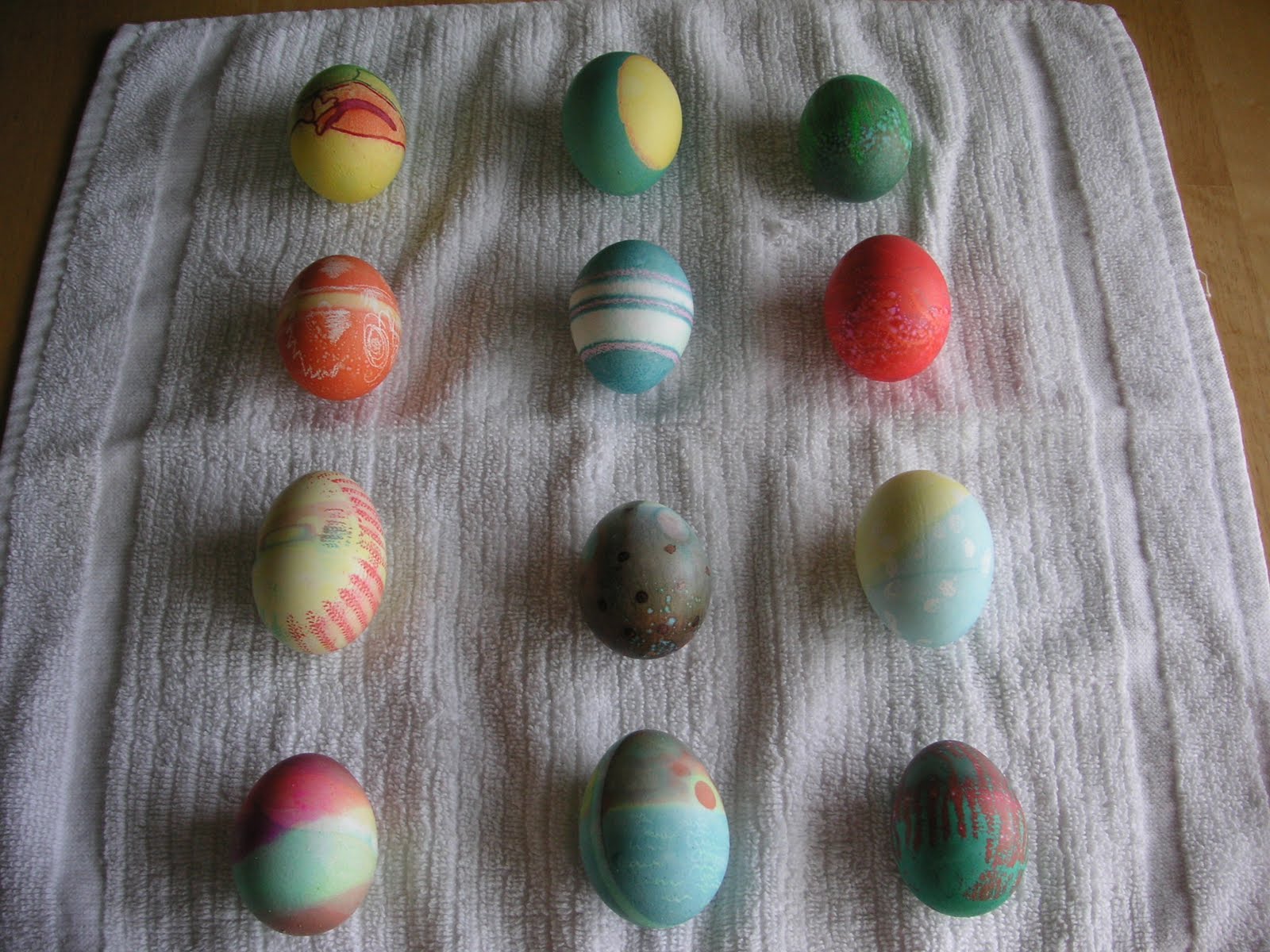
Showing posts with label * eggs. Show all posts

Monday, April 21, 2014

habitat ~ 04/21/14 ~ Toro County Park


Toro County Park has an Easter hangover.  Oy vey!  What a mess.  I talked with one of the grounds guys.  He told me it was packed at the park the day before with massive Easter parties and lots of BBQing and music.  He said everyone seemed to be having fun.  I didn't envy the job ahead of him.  How does one clean up confetti mixed with leaf litter and dirt?  He was in good spirits, because it was a beautiful day.  I like people like that.

I can't say the mess is a pet peeve.  I realize this is a county park, and in my mind they serve a definite purpose of human use.  If everything is pristine and natural and hands-off, you end up alienating the very people who need the outdoor experience the most.

Plus, I understand the fun, because I totally want to be in a massive confetti parade myself, like they do after the SuperBowl.  I remember making a cascarĂ³n in 6th grade here in CA, but we did it at Christmas for some reason.  There was one particular boy who was especially mischievous and kept bringing in numerous eggs to crack on all the girls' heads.  I bet his mother was accommodating, because my mother would only spare one egg for me to practice.


goldfields in the lawn

One of the wildest things about Toro County Park is how the native flowers grow in the lawn like invasive weeds.  They even park their cars on it.  It's not herbicided or whatever is usually done to keep grass only grass, like at sterile golf courses.  Besides goldfields, I found checkerbloom, Johnny jump up, popcorn flowerslotuses, and one of my favorites, coast pretty face.


This is only my second visit ever to Toro County Park.  The last time in September 2012, it was dry, dry, dry.  Do you blame me for waiting so long?  Andy runs here regularly, and indeed he was on a 2 hour run while I meandered up one of the trails looking for flowers and butterflies until the poison-oak was too thick over the path.  It was a pretty day and very green.

Sunday, April 20, 2014

Easter 2014 in the Highlands

decorated beer cans for hiding

brightest flowers (irises) that caught my eye

Bird Island of Point Lobos

hidden egg

my favorite spring garden view

Easter landed late on the calendar this year.  Tulips are long gone, and irises are making quite a showing in gardens all around.  The blues and purples reign right now: pride of Madeira, CA lilac, greater periwinkle, and a variety of other garden flowers.  Does anyone know what the purple flowers behind the hidden egg are?  Andy and I didn't dye any eggs this year.  And, there wasn't actually a beer hunt after the egg hunt, but I was happy to see some folks made the effort to decorate cans.  It's one of those things where it's more fun to talk about than to actually do. Plus, the ages of the participatory kids ran too young to do a proper beer hide, and there were enough young teens who felt the shaked-can joke was getting old.  No one drinks the beer anyways.  It's all about the yummy potluck of epic proportions.

Oh!  We had a heart-stopping 10 minutes down at the beach.  Three people had gotten stuck on a rock in the very active high tide.  It looked like they could have easily been swept out to sea with the next rogue wave.  It's well known around here that the first rescuers are often the ones who end up dying, not the person in trouble. It's such a helpless feeling to watch this.  There's a beach just on the other side of Point Lobos that the locals call "Mortuary Beach", because every year people die in the waters there.  Thank goodness these three eventually got off the rock safely after holding on for dear life and waiting for a break in the wave action.

As always, my best memories are in the sharing of this Easter tradition with good friends, old and new.  It's one of the few holidays for which I'm very sentimental.  Happy Spring!

Sunday, March 31, 2013

Easter 2013 in the Highlands

 our eggs

 brightest flowers (blossoms) that caught my eye

 Bird Island of Point Lobos

hidden egg

my favorite spring garden view

posted 04/09/13 - Here's my annual Easter entry, a little late.  I've been attending this party for over a decade now ever since I moved back to CA, and I've included 5 of those years on this blog.  Without children of our own and family so far away, I observe very few traditions, so this is very special for me.  The real memories are in all the pictures I don't post:  Andy's awe the first time he came with me when we began dating; kids who struggle with the milestone question of "Am I too old to hunt for eggs?"; the velcro-egg hider who gave us Icelandic ice cubes as a wedding present; Andy's mom's tinkly laugh as she participated in the beer hunt that follows the egg hunt; the wide-eyed mixed reactions of friends who came as my guests; the waffle-maker who didn't make waffles; and older ladies who progress from canes, to walkers, to wheelchairs, to memories.

Sunday, April 8, 2012

Easter 2012 in the Highlands

(not) our eggs

brightest flowers (fuchsias) that caught my eye

Bird Island of Point Lobos

hidden egg

my favorite spring garden view

Here's my annual Easter post. I use the same five picture themes every year. To see past years, click my * easter label and scroll down.

This year's celebration felt very different for several reasons. The Williams family are making the tough and beautiful transition without Cynthia. Two of her daughters, Molly and Honey live on the compound, and they are shaping "The Carmel Institute" to better suit their own preferences. I absolutely love their garden. Also, Andy and I have our own evolving life priorities. At the shin-dig, there were plenty of familiar faces and several new folks who brought plastic eggs and decorated beer cans. I don't remember the last time I saw plastic eggs as part of the hunt. As for Andy and me, well, we didn't dye any eggs this year (nor did we make paper snowflakes... hmm?) Time and attention have certainly slipped by us. Plus, it was our wedding anniversary, and that post will be forthcoming.

If Molly, Honey, and all their friends who helped out read this, here's a heartfelt thank you!

Saturday, December 10, 2011

green lynx spider ~ 12/10/11 ~ Los Padres Dam

western variation female green lynx spider on cudweed
Peucetia viridans on Pseudognaphalium sp.
Asteraceae

That's quite a large egg sac she's protecting! She's about 1" or more in size but not very green, eh? While searching for an ID, I looked at other Oxyopidae, and none seemed to match as well as P. viridans. It helped to read that this spider can change color depending on the season or surroundings. As I was getting in close to take pictures, I got a whiff of the lovely scent from the cudweed. Green lynx spiders are not the only things that utilize cudweed blooms; Cindy at Dipper Ranch found American lady caterpillars tucked into her cudweed.

Wednesday, July 27, 2011

caddisfly eggs and cases ~ 07/27/11 ~ Butano

caddisfly egg mass
Trichoptera

I looked at the usual suspects for this area, like California newt or California red-legged frog, but none of the pictures seem to match this egg mass. Each egg did not appear to have any round definition. The whole gelatinous mass was attached to the rock on the top and loose and flat on the bottom. It was roughly a quarter coin in size. When I found it, it was positioned in such a way that half was in the water and half was above water. After taking the above picture, I placed the rock back to about how it was in the water. Anyone have any ideas of what animal laid this egg mass?

edited 08/05/11 - I originally posted this as an unknown egg mass. I initially thought it might be an amphibian egg case, particularly after I had just spotted a CA newt. Thanks to commenter Neil of microecos and Oryctology blogs, I have an answer. Neil has been extraordinarily helpful in identifying things for me and providing information, although I find I have to google about every other word in his blogs to even get a gist of his topics. All I can do is stand back in awe of people whose brains function on that level.

If I had seen an adult caddisfly, I would have been able to identify it to Order without too much trouble. I like to think of Trichoptera as aquatic versions of Lepidoptera. Indeed the two Orders are closely related with adult caddisflies looking very similar to moths. However, there is very little specific information available on caddisfly eggs. The only picture I can find online that looks anything like the egg mass I found is from Bruce G. Margot's taos-telecommunity. I'm hesitant to agree with his guesses to family and genus since I have no way of confirming his IDs. There are other types of caddisflies that lay eggs on leaves instead of rocks. For lovely pictures of egg masses attached to leaves, check out Natura Mediterraneo and manham's Flickr set.

caddisfly larval or pupal cases
Trichoptera

It simply never occurred to me that whatever laid the relatively large egg mass was also the same type of animal that made the gravel clusters seen right next to the eggs on the same rock and all around in Little Butano Creek. I'm guessing these are two different species of caddisflies, but then again, I have no way of knowing for sure. The gravel clusters are protective cases caddisfly larvae make using silk and available materials, such as sand, twigs, or jewels as provided by Hubert Duprat. Depending on the species, they can either live in them through their entire immature stages or make them only to pupate, like a cocoon of sorts. I was hoping to be able to identify the cases since some are distinctive enough to be diagnostic, but that might be asking too much. Aquatic Insects of Central Virginia has a nice posting on saddle-case makers (Glossosomatidae), which was the closest shape of case I could find to match what I saw.

As a side note, you would not believe the amount of e-mail that went on behind the blog scene here. At one point someone sent me a picture of another unidentified case made out of twigs and I forwarded it to an entomologist in Australia. Interestingly enough, caddisflies are not the only insects that make cases from surrounding materials. Bag moths in the Order Lepidoptera and Family Psychidae make startling similar cases, the log cabin shape out of twigs (bag moth vs. caddisfly) and the tubular shape out of sand (bag moth vs. caddisfly). Besides size, the easiest apparent difference is caddisfly cases are usually found in water. If you can manage to get the larvae to peek out, caddisflies have rather long front legs and bag worm caterpillars are short.

This was a really fun post to share. Thanks to everyone who helped out and put in their 2 cents.

ps 09/27/11 - For a good summary of various caddisflies, check out Aquatic Insects of Central Virginia's newest post.

pss 10/03/11 - I'm happy to report this blog post has been included in Circus of the Spineless #66 blog carnival, hosted at Wanderin' Weeta (With Waterfowl and Weeds).

Thursday, June 30, 2011

spider egg sac ~ 06/30/11 ~ at home

spider egg sac

Ever since I found several pupa and a poop-shooting, geranium-eating caterpillar, I've placed various wandering spiders on my geranium plant. I am hoping these are spider eggs, but I don't really know. Each egg rolled around inside the silk sac like miniature gumballs. To find out what they are, I placed this broken stem in some water and the whole thing in a container. My handy-dandy containers with nylon stocking tops are getting a workout this year.

ps 07/14/11 - I originally posted this as an unidentified egg sac. Yep, these are spiders. They hatched 2 days ago and were clustered around the silk casing. I took them out this morning to take a closer look and hopefully get some pictures, but with the slight movement they all started dropping on tiny lines of silk. I was barely able to float them over to a couple plants where they hung in the breeze off the leaves. I hope they stick around.

Monday, May 30, 2011

Pacific chorus frog ~ 05/30/11 ~ at home


A friend gave me a bowl of frog eggs attached to some kind of oxygenating plant (Myriophyllum sp., aka milfoil?), duckweed, and a couple of small snails from her barrel pond on 05/21/11. Within a week 2 tadpoles hatched. They were very tiny and extremely good at hiding. I was worried the others wouldn't hatch, but when I shook the bowl, they wiggled inside their egg cluster.

The day after I took the photos above, I transferred the pond water to a 5 gallon aquarium where I had water sitting out a few days to allow the chlorine to dissipate. The agitation from the transfer released the remaining tadpoles from their sacs. There were other miniscule organisms swimming around in the water that I could only see in the sunlight. The aquarium turned green with algae fairly quickly. I siphoned off some of the water and refilled with fresh water. Turns out this may not have been necessary, because as the tadpoles get larger and the duckweed spread to cover almost the entire surface, the water has become clearer on its own.

It's been fun watching the tadpoles grow. By 06/10/11, they already started looking "pregnant" with big round bellies and could no longer cling to the side of the aquarium. Quite honestly, I'm not sure what I'm going to do with these frogs once they metamorphose. My friend collected tadpoles from a pond in Seaside last year and added them to her existing barrel pond here in Pacific Grove. By the first of April, she witnessed 3 sets of frogs mating. She made a video for the sound recording; click here to listen to how loud they are.

ps 07/11/11 - The oxygenating plant the eggs were attached to is rigid hornwort (Ceratophyllum demersum). While this greenery is good for aquaria and is found worldwide, it is not necessarily beneficial out in the wild.

Sunday, April 24, 2011

Easter 2011 in the Highlands

our eggs

brightest flowers (geraniums) that caught my eye

Bird Island of Point Lobos

hidden egg

my favorite spring garden view

Per my standard Easter entry, I have a specific set of pictures that I post here on Nature ID. To see all my Easter posts from 2011, 2010, and 2009, click here.

What was not standard this year was Cynthia Williams, the matriarch of "The Carmel Institute", died at the end of January after more than a year of failing health with the need of round-the-clock care. I added a postscript of her obituary and a link to Design Faith's blog entry about Cynthia in my 2010 post. A heartfelt and intimate memorial with lots of laughter was included at the end of the traditional Easter soiree.

The family's annual Easter celebration has been held for almost 70 years! Anyone who wanted to participate was invited and welcomed with open arms. It always included sequestering the children in the living room while the adults hid hard-boiled eggs in the expansive garden. Cynthia, dressed in her colorful Easter attire, blew her horn to start the hunt. After most of the eggs were found, the older children then hid decorated cans of beer for the adults, often vigorously shaking them as a prank on their dads. It wasn't unusual for the dogs or the gardeners to find old eggs or cans of beer up to a year later in the bushes. After the hunting for eggs and beer ended, a scrumptious potluck of massive proportions ensued with libations of punch, wine, and gin fizzes. Plastic swords, big wheels, tire swings, trampoline, acoustic music, and a poison oak lined path to the south Point Lobos beach were post-brunch activities for the young and old alike. I have every confidence that the family will continue this Easter ritual.

Another thing that was not standard this year was I was extremely sick from what I thought was a severe cold that even ruptured my only good eardrum. Normally, I would have stayed home to keep from spreading my germs, but I needed in my heart to attend and share in Cynthia's memorial. While I stayed away from most people and didn't socialize like I would have liked, partly because I couldn't hear too well, I am very glad I went. A few days later I ended up in the hospital with pneumonia and other complications. I'm still recuperating... but I can't help but believe this was Cynthia's way of instructing me that I need to take better care of myself.

Thank you, Cynthia, for your joie de vivre, generosity, and inspiration!

Tuesday, October 26, 2010


They hatched! It's been 9 days since they were laid next to our front door. See my October 17, 2010 blog entry of their beautiful mother. Yesterday I noticed most of the grey eggs had turned a bright steel-blue color. I should have known some action was about to start, and yet I was a bit unprepared this morning as I was heading out the door.

I quickly got a container out. It's a simple plastic jar with cut pantyhose secured over the top with 2 rubber bands and tied in a loose knot. I've found rubber bands tend to deteriorate after a while, so using a backup is an easy solution. For insects that are tiny, like these 2mm Arachnis picta caterpillars, nylon keeps the critters from escaping and is stretchy enough to allow you to get into the container for feeding and cleaning.

I used a small soft paintbrush to collect the caterpillars onto a sheet of paper and then poured them into the container. In my haste, I neglected to add a damp paper towel to the bottom of the container. Some moisture is good, but when caterpillars are this small they can easily drown in a drop of water. Didn't you know? Caterpillars are not good swimmers.

I quickly threw in some organic carrot tops that I had on hand thinking primarily about accessibility to more of the same. Doh! I've inadvertently killed previous lepidopteran broods, because Btk is a commonly used organic pesticide. Later when I got back home, I went around outside and clipped various foliage with hopes they'd like one of them. I did a fairly extensive online search to see what the painted tiger moth larvae eat. There's no consistent information. Some say Lupinus, others say mustards or dandelion or bull thistle, and still others say radishes and Acanthus. I don't have easy access to any of those and am still kicking myself for pulling the dandelion shoots from my compost several weeks back.

ps 10/27/10 - I checked around noon and the caterpillars seem to like the carrot, dandelion, and fennel. They're already pooping tiny black specs, so that's a good sign. I'm still not sure if I'll keep these caterpillars, since it may take a whole year to properly rear them. Oh! I used the second pic of the container above, because the shiny plastic isn't very good with flashes indoors and I also wanted to show the unusually humongous waves we had yesterday.

pss 11/01/10 - Yesterday morning, several caterpillars had spun tiny little silk mats on the container. Today, I noticed several are bigger (3.5mm), lighter in color (must have molted over night), and hairier with bits of fluff next to them (cast exoskeletons). I'm still contemplating releasing them.

pss 11/06/10 - For the final post on these critters, click here.

Sunday, October 17, 2010

painted tiger moth ~ 10/17/10 ~ at home

painted tiger moth
Arachnis picta

I found this painted tiger moth sitting on top of her just-laid eggs next to our front door. She was covered in cobwebs. Maybe I'm unusual, but I haven't cleared the plethora of webs from our entryway, because I figure the spiders need nourishment this time of year to lay their own eggs. I took the moth inside to clean her off and take a few pics. She was already a bit worn, and yet she was determined to get away from the light of the window while I tried to take pictures. Once I was done with the photo shoot, I set her back next to her eggs. She was gone the next morning.

This is the second moth egg set I've seen in the past 2 weeks on our building. The other set already hatched with tiny fluffball caterpillars that started dropping off the wall with my smallest exhale. Larval Arachnis picta are fairly ugly compared to their adult kin, especially right before they pupate. I found this InsectNet.com site to be particularly good for showing the stages of painted tiger moth development. I'm going to take note when the eggs hatch. Who knows, I may pull out my old containers and raise these moths for the heck of it. I just hope the caterpillar hairs are not urticarious. I learned my lesson with mosquitos, honey bees, io moths, and walking sticks that feed on blackberry - I do not want to raise anything that involves biting, or stinging parts, or feeding on prickly things! I originally posted a pic of this moth on Flickr with what I think is the true version of the famous Bourdillon poem.

ps 10/26/10 - For a follow-up post of hatched eggs, click here.

pss 09/23/11 - I found my first painted tiger moth today on the wall of our building.

Sunday, April 4, 2010

Easter 2010 in the Highlands

our eggs

brightest flowers (tulips) that caught my eye

Bird Island of Point Lobos

hidden egg

my favorite spring garden view

Realized I took similar pics last year, so am testing out how I want to post and label these...

We were fortunate that it didn't rain until late afternoon. There was a proliferation of calla lilies this year that isn't evident in any of the pics I've posted. Additionally, the hummingbirds were quite active, diving and chasing each other - as much as I'd love to post pics of them, I'm not fast enough with the camera.

I'm still not sure if these Easter pics are appropriate for this blog. Use the Easter label below to see last year's pics.

ps 02/19/11 - I don't know where else to express this. So, I'm including a copy of the local Monterey Herald's obit here before it disappears online:

Cynthia Criley Williams
1915 ~ 2011

CARMEL HIGHLANDS - Cynthia Criley Williams, "the Mother of all Mothers," died peacefully at home on January 29, 2011 at the age of 95. Her memorial celebration will be held on Easter Sunday, April 24, 2011, following the traditional egg hunt in her garden.

Cynthia was born in Monterey, in 1915. Her parents, painter Theodore Morrow Criley and Myrtle "Tootie" Criley, were members of the early Carmel artists' colony. They built a house in Carmel Highlands, on the southern boundary of Point Lobos, and the family moved there when Cynthia was two. They traveled widely in Europe, spending a year in France when she was six and again when she was thirteen, which fostered in her an old-world sensibility. Back home, Cynthia attended Sunset School, Monterey Union High School, and Scripps College, Claremont.

In 1935 Cynthia married physician Russell Williams. They moved to New York, where she attended Barnard College, and started a family. In 1940, back in the Highlands, they built a house on the family property, designed by Cynthia's architect brother, Theodore. Although Russell's medical training and military service took the growing family at various times to Baltimore, Las Vegas, and Topeka, Carmel Highlands was always home, and where they finished raising their five children.

Cynthia's father was from a hotel-keeping family, and perhaps following this tradition Cynthia opened her home, welcoming neighborhood children, family friends and friends of friends, temperamental artists, struggling writers, serious scholars, lively fishermen, blossoming singer/song-writers, crazy carpenters, earnest scientists, left-wing politicians, student activists, weary world travelers, and wayward teenagers; people might come for the weekend and stay for months. She established an ever-evolving eclectic community, rich with traditions and rituals that she devised. Generations of children learned the joys of camping from her, and lounged on her couch reading comic books; no television allowed. Her menagerie over time included dogs, cats, horses, goats, chickens, ducks, geese, parrots, and injured wildlife (including a seal). The family was devastated by the loss of son Richard ("Red") Williams, who suffered from depression and took his own life in 1961. The marriage ended in 1963.

In 1956, Cynthia had begun purchasing small rental houses in Pacific Grove, and developed a career as a landlady. Her reputation for fairness and generosity spread, and her little houses were much in demand; many of her tenants became part of her extended family community.

Like her Civil Libertarian brother, Richard Criley, Cynthia was a committed advocate for civil rights. She was a true egalitarian who treated everyone alike (except for pregnant women and parents of small children, who got special dispensations). Even in her 90s she attended peace demonstrations on Highway One near her home.

Cynthia had a deep love of language and literature. Her love of learning was life-long; she began studying ancient Greek in her 80s. Her open-mindedness, her generosity of spirit, and her passion for thriftiness were legend. Her mottos were "Waste not, want not" and "It's a great life if you don't weaken." She loved her garden, her view of Point Lobos, summer fog, and a good cup of tea.

Marian "Bee" Chaffey, John Williams, Margaret "Honey" Williams, and Molly Williams are her living children. She leaves four grandchildren: John Chaffey, Margaret Chaffey, Richard Russell Williams, and Sarah Williams; four great-grandchildren; the vast extended family; and her devoted dogs.

In her last year Cynthia's health declined. Her family and friends gratefully acknowledge her superb team of caregivers: Henrietta "Cha Cha" Nuno, Eustacia Pedraza, and Anna Casteneda; and the wonderful services of Hospice of the Central Coast. Cynthia herself requested that her friends honor her memory with donations to the Bookmobile (The Monterey County Free Library System).

Nothing we can say here can adequately express our gratitude for her life.

-----

Here's a link to another blog I found in Cynthia's memory: http://designfaith.blogspot.com/2011/01/watching-over-point-lobos-watching-over.html

Sunday, April 12, 2009

Easter 2009 in the Highlands

our eggs

brightest flowers (roses) that caught my eye

Bird Island of Point Lobos

hidden egg

my favorite spring garden view

The blue yarn you see in the second and third pics above marks the boundary for egg hiding and hunting.