Showing posts with label century plant family. Show all posts

Sunday, December 25, 2011

wavyleaf soap plant ~ 12/25/11 ~ Jacks Peak

wavyleaf soap plant
Chlorogalum pomeridianum var. pomeridianum
Asparagaceae (formerly Agavaceae, Hyacinthaceae, & Liliaceae)

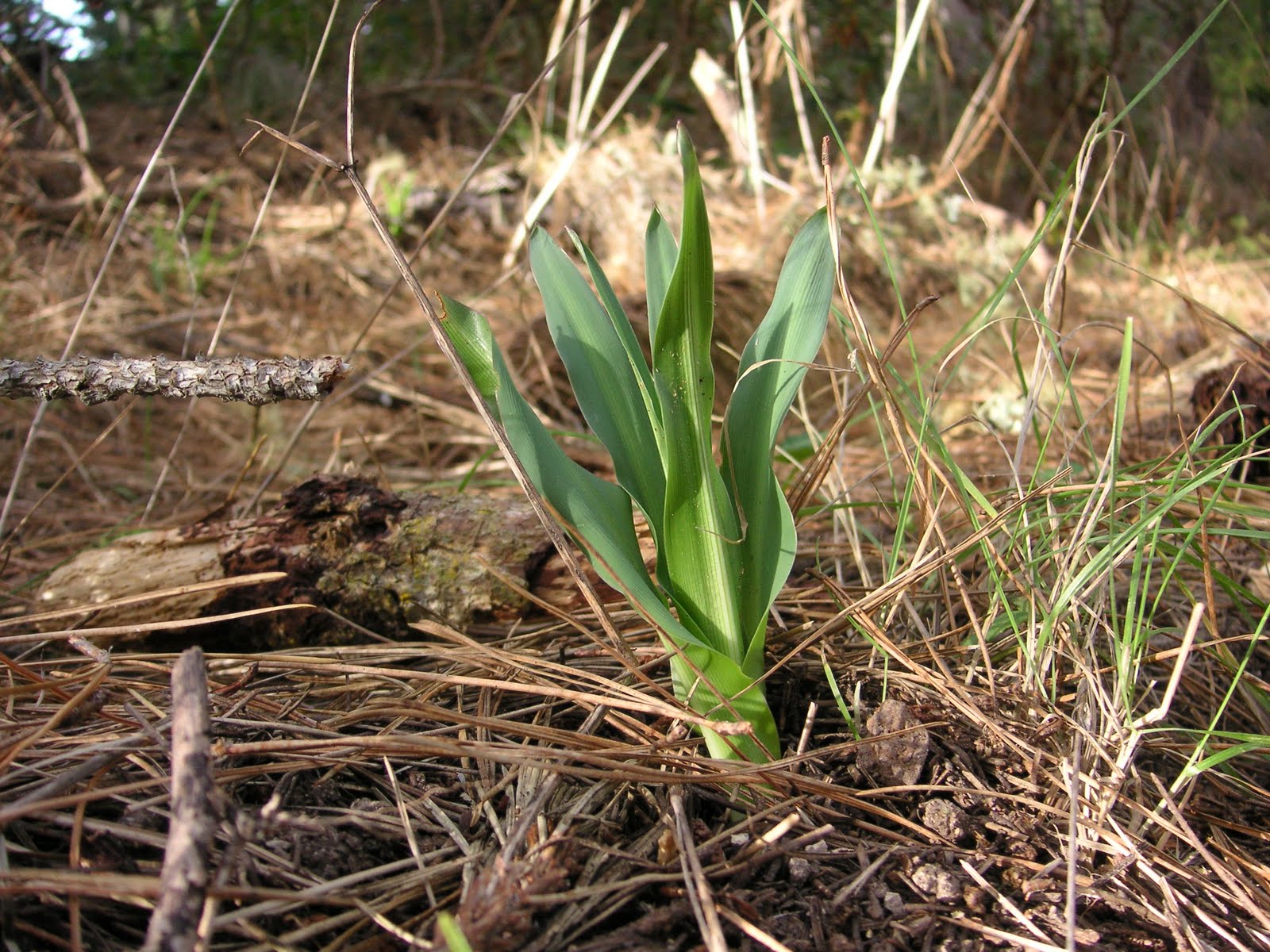
Edited 01/03/12 - I originally posted this as a sprout of Fremont's star-lily, but thanks to my commenters, I've corrected the ID above. It's been a goal of mine to track the seasonal evidence of both death camas, aka Fremont's star-lily, and soap plant, especially in areas where they literally grow from the same spot of ground like at Jacks Peak. I've made a fuss about how several online sites have them mixed up, and I've admitted I get them confused, too, when they only have green leaves - the flowers are too distinctive to ever get them mixed up. I've now concluded that death camas is an early flowerer compared to 3-4 months later in the season soap plant.

Thursday, August 4, 2011

wavyleaf soap plant ~ 08/04/11 ~ Jacks Peak


posted 01/03/12 - This is the exact area I photographed death camas back on February 11, 2011. When I took these pictures, especially the middle one above, I truly believed I had finally captured both soap plant and death camas together. Now that I've had the space of time to look at the pictures, all the fallen leaves look like wavyleaf soap plant.

Thursday, June 30, 2011

wavyleaf soap plant ~ 06/30/11 ~ Fort Ord

Chlorogalum pomeridianum var. pomeridianum
Agavaceae

Finally I have some pictures of this plant's flowers. They're only open in the late afternoon through one night (hence pomeridianum from post meridium, aka p.m.), a time of day when we don't usually hike. Shown in the second picture at the base of the green flower stalk are the dried leaves, although I don't think they always dry up by the time this plant blooms. True to the common name, when the rosette leaves are green, they can have a distinctive wavy margin. Also, it's named soap plant for a reason. The best site I've found that talks about its many historical uses is Wayne's Word.

STRONG WORDS OF CAUTION: As Wayne points out, make sure you're positive of the ID before using soap plant. You'd think no one would mistake death camas for soap plant, but many do, including myself in retrospect. I've seen both plants growing within a couple feet of each other (Jack's Peak death camas / soap plant, Wilder Ranch death camas / soap plant, and Rocky Creek death camas), and the leaves can look somewhat similar when the variation and extent of waviness is in question. This can be an issue if you dig up the bulb in winter when only the green leaves are visible. As I was looking up information for this post, I found a couple blogs and professional-looking sites with incorrect photo IDs, e.g., Plants of California, a Guide to Useful, Edible and Medicinal Plants shows death camas flowers, not soap plant! This is why I try to be as diligent as possible when posting IDs, because I know Nature ID gets picked up by search engines. While I do make mistakes, I also do not claim to be an expert, especially on edible or medicinal plants. It basically comes down to being smart about what we read online.

As a last note, I should mention the lush green stuff in the background is poison-oak. Funnily enough one of the reported uses of soap plant is to treat poison-oak rash. While there are many generic "obviously copied from somewhere else" notations of this online, I discovered Plants for a Future actually includes original references.

ps 01/23/12 - For a soap plant recipe, check out the comments on this tulipsinthewoods.com blog post.
Friday, February 11, 2011

Sunday, July 25, 2010

wavyleaf soap plant ~ 07/25/10 ~ Washington Park


posted 07/30/11 - Last year I missed the blooms on this soap plant as it was likely too early in the day. Since the flowers only last one night, I wonder how long it takes before the seeds form. Without a plant list, I don't know which 2 of the 3 varieties this would be. Both var. divaricatum and var. pomeridianum are found in Monterey County.

Thursday, May 28, 2009

chaparral yucca ~ 05/28/09 ~ Los Padres Dam

Hesperoyucca whipplei
Agavaceae

The blooming yuccas were extraordinary on the hillsides, like big white torches, but were too far away to take a good pic. We think the last pic above is of a burnt yucca stem base leftover from the fire.