Showing posts with label rose family. Show all posts

Sunday, June 8, 2014

hedgerow hairstreak ~ 06/08/14 ~ Hastings

bronzed hedgerow hairstreak (aks sepia hairstreak) nectaring on chamise
(Tenney and Walker)
Rosaceae

This was our group's last find of the day for the Hastings Count.  It was a long, hot day in a near-futile search for hairstreaks.  Oof.  Maybe we saw 4 individuals that weren't CA hairstreak?  Paul was particularly good at spotting those.  I didn't keep count.  Thankfully, Jerry Powell did.  There are a handful of other small brown butterflies that, from a distance, can look just like the hedgerow hairstreak.  They're tiny, dark, zippy shadows.  Even with binoculars, the hairstreaks have the annoying habit of turning their leading edge towards you so you can't see their wing pattern.  Ya, I'll probably not take a liking to most hairstreaks, because they seem to be best found at the top of very tall buckeye trees or other inaccessible trees, like blue oaks and coffeeberry.  We even resorted to throwing rocks at trees with hopes to flush out the butterflies.  Jerry was particularly skilled at this endeavor with one well-placed hit to the top of a trunk, whereas I was lobbing the first rocks I could find into thin air.  Ha!  This is not regular practice, mind you, just for the annual count's purpose of recording every possible butterfly we can find.  I'll admit I didn't do this for the Pinnacles count I recorded.  I had no idea how to do it before.  Eh, generally, if they play that hard to get, I'm not that interested.  To me, it's easier to search through closer-to-the-ground nectaring plants (although I have found a hedgerow hairstreak on its host plant buckbrush at Pinnacles).  Blooming chamise growing on top of a hill seems to do the job here.  Lots of butterflies like the toppest top.

Chris and Paul prefer using binoculars (pfft, birders.) and have both given me heavy binoculars to pointlessly carry on long, hot hikes.  I'll try most things at least once, and I did try using the special close-focus binoculars for butterflies a few times.  I don't particularly care using them because I have trouble finding and focusing on what are frequently fast moving objects.  Plus, I worry I'll miss seeing the many butterflies that do fly within a few feet of me, as I have seen happen so often when other people are too focused looking through their binoculars.  Eh, the extra effort of hauling them around is not worth the results to me.  I'm not sure if anyone was able to determine the IDs of the ones we saw sitting on the tallest buckeye blooms, anyways.  There you go.   

Oh!  One last ID note, Paul pointed out the rich, suede brown color on the dorsal side of the abdomen also matches the topside wing color.  In the photos above, there's a little nip at the forewing apex that shows the topside color.  Handy-dandy reference, but I already forgot which other hairstreak the comparison was made.  Did, I mention it was a long, hot day?

ps 06/14/14 - Here's the look-alike mountain mahogany hairstreak with a similar nip in the right forewing.  Note the darker brown color with bluish tint of the mountain mahogany.  Considering the tail length, is this a female, then?

Sunday, March 9, 2014

Sonoran blue ~ 03/09/14 ~ Pinnacles

Rosaceae
for more information click here, here, and here

Yay!  This is my second visit to Pinnacles in a dozen days to capture a photo of the Sonoran blue.  I actually spotted a couple back on February 25, 2014, but they were too elusive for the camera on the stonecrop rocks.  That sighting is now the first Sonorans for the 2014 Pinnacles butterfly report that Paul Johnson keeps.  I thought this would be another new record of nectaring use for Jeffrey Caldwell and the book he's writing; however, upon closer inspection its proboscis is not sipping.  He's been looking for first-hand accounts, and here I already have a * nectaring label on Nature ID, ready made for him.  I think for him, he especially likes that I have taken the time to ID both the butterfly and the local nectar source.  I'm proud my blog can be useful to someone other than myself.

OK.  Am I nuts to be driving all over the place just to find a tiny animal?  Hey, I have a gas efficient car and the time, so why not?  I'm now officially part of the unemployment statistics. Ugh... I've also been painfully feeling the passage of time, and I'm afraid I'll look back and regret not having done more with my life.  I guess I'm in the midst of the classic midlife crisis.

I have Ken @ Nature of a Man to thank for getting a possible solution started when he sent me a query about a Sonoran blue he found near Mariposa 2 weeks back.  I didn't even have to look this one up, because I already knew about the Sonoran blue even though I have never knowingly seen it in person.  It's a sweet sighting and a unique butterfly.  Then, Ken had the audacity to call me "Butterfly gal" and a "Lepidopterist" with a capital 'L'.  I denied it and said that was from another life in another state.  But, is it, really?  I think I underplay what I have accomplished and what lies in my heart.  To avoid too much public navel-gazing, I'll leave it at that.  Thanks, Ken.

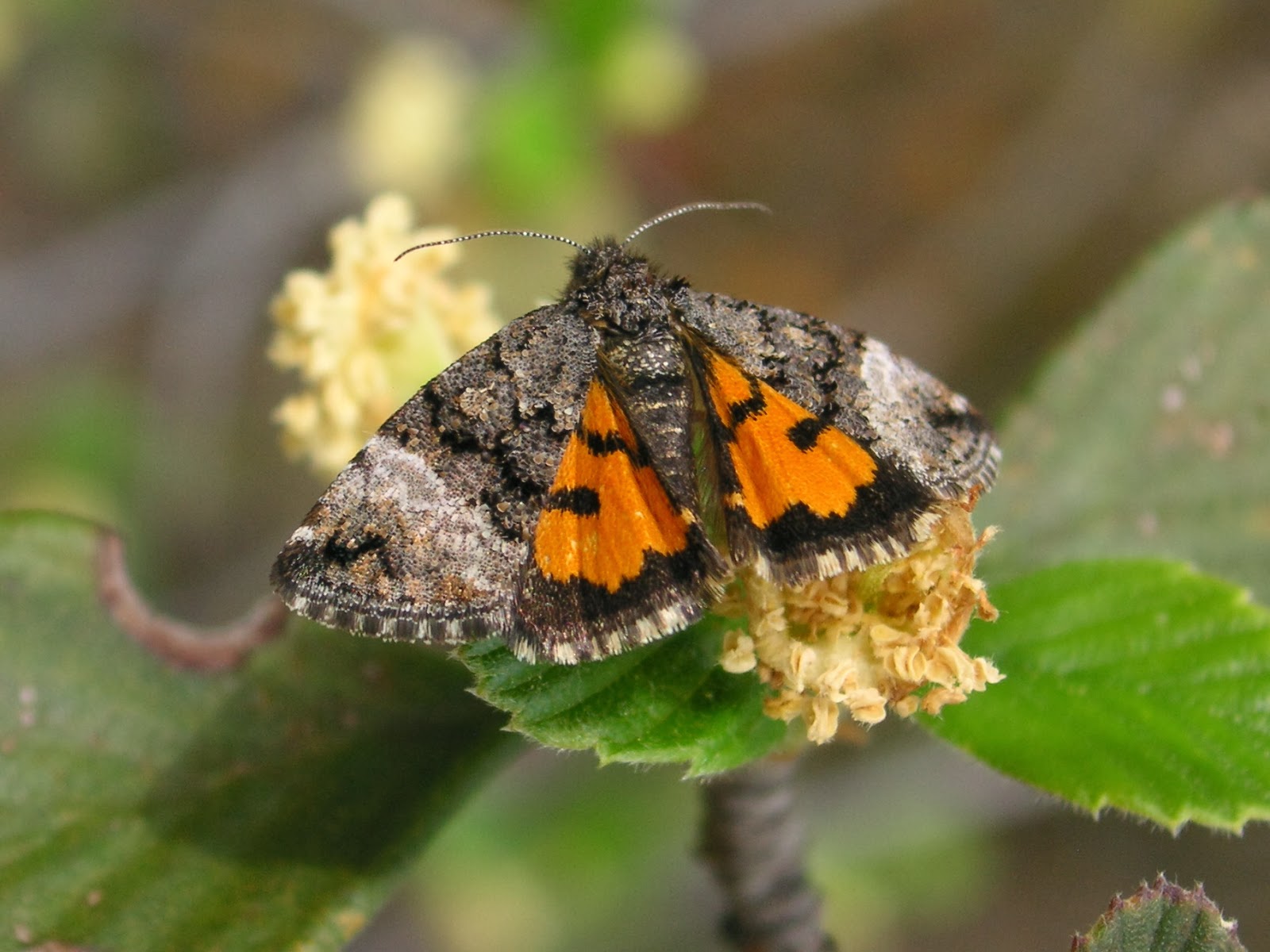
Annaphila decia ~ 03/09/14 ~ Pinnacles

Annaphila day-flying moth nectaring on birch-leaf mountain mahogany
Annaphila decia nectaring on Cercocarpus betuloides
Rosaceae

I think I've fallen in love.  This Annaphila is small, maybe 2/3 the size of its larger A. depicta sibling.  In fact, that's how I was introduced to the genus 3 years ago by Chris Grinter.  Its lines are gorgeous.  Look how they line up exactly on both the top and bottom wings, in its natural pose.  Even from the underside, there's full-on orange.  Be still my heart.

Unfortunately, I'm uncertain of its ID.  I queried Paul Johnson from Pinnacles, and we agreed it isn't well represented online.  Come on, look at this horrid picture.  He thinks it's A. decia. Both Moth Photographers Group and Pacific Northwest Moths have spread photos that don't quite match in my eyes.  I used to be quite familiar with Hodges, and I believe it's possible this is a yet undescribed Annaphila species (Hodges 9850-9872), the same as Hartmut Wisch's photos on BugGuide.  I'm asking Jerry Powell and Paul Opler for their opinions, hence why I'm including extra photos in this post.  Then, for Jeffrey Caldwell, yes, I do have additional pictorial evidence of proboscis use on the Cercocarpus betuloides flowers.

Holy cow, btw!  This bush was literally buzzing, which is so strange, because nothing else around it had that kind of activity, not even neighboring mountain mahoganies.  The leaf chews were kind of cute.  Leafcutter bees?

Annaphila decia looking very much like a jumping spider

And finally, you read it here first on Nature ID.  Paul Johnson suggested I could get an Annaphila paper out of the uncanny resemblance to jumping spiders that I noticed in this photo, right down to their striped legs.  The black scales on its shoulders and scruff of the neck look a lot like eyes, don't they?  Of course, I'd need to look at Paul's PNP specimens, observe more, take a lot more photos including local jumping spiders.  Apparently, our crappy 10-year-old point-and-shoot isn't so crappy, since it gets images when Paul's fancier DSLRs scare away the subjects.  Mmm, maybe, I should take on this pet project?  That is, if I don't lose interest first; I am prone to infatuations, after all (don't get me started on salamanders).  At the very least, I should figure out a way to get gas and food supplemented for these kinds of efforts.  For astonishingly hilarious jumping spider videos from down under, check out Jürgen Otto's peacock spiders.  Ha!  LiveScience has an excellent interview with Jürgen of how he came to do this.

ps 03/16/14 - I'm worried I might be a little crazy to believe I may have found a "new to science" moth.  In my defense, I've seen it happen twice for plants at Fort Ord within the last 2 years.  For some wacky reason, land life has not been as well-documented for the greater Monterey area compared to just north by 2 hours.  I think everyone is focused on the ocean life here, instead.

Then the thought process continues to something on my bucket list.  I want to be the person to name and describe a new species.  Crazy, huh?  I already know I would name it after Chris Grinter @ The Skeptical Moth, because of all the help he's provided me with moth IDs since I started my blog 5 years ago.

I've heard back from everyone I've queried.  I feel like I've found my fold with their various personalities.  There was a suggestion that this was A. divinula, which has only a single online reference on the Moth Photographers Group.  Nope.  Yes, yes, I already have in mind to personally check out 5 collections that would most likely have comparable specimens.  And so, my journey continues...

ps 03/21/14 - I've made a firm ID above (until I find out otherwise) and provided an update with comparison to Pinnacles specimens.

Friday, February 21, 2014

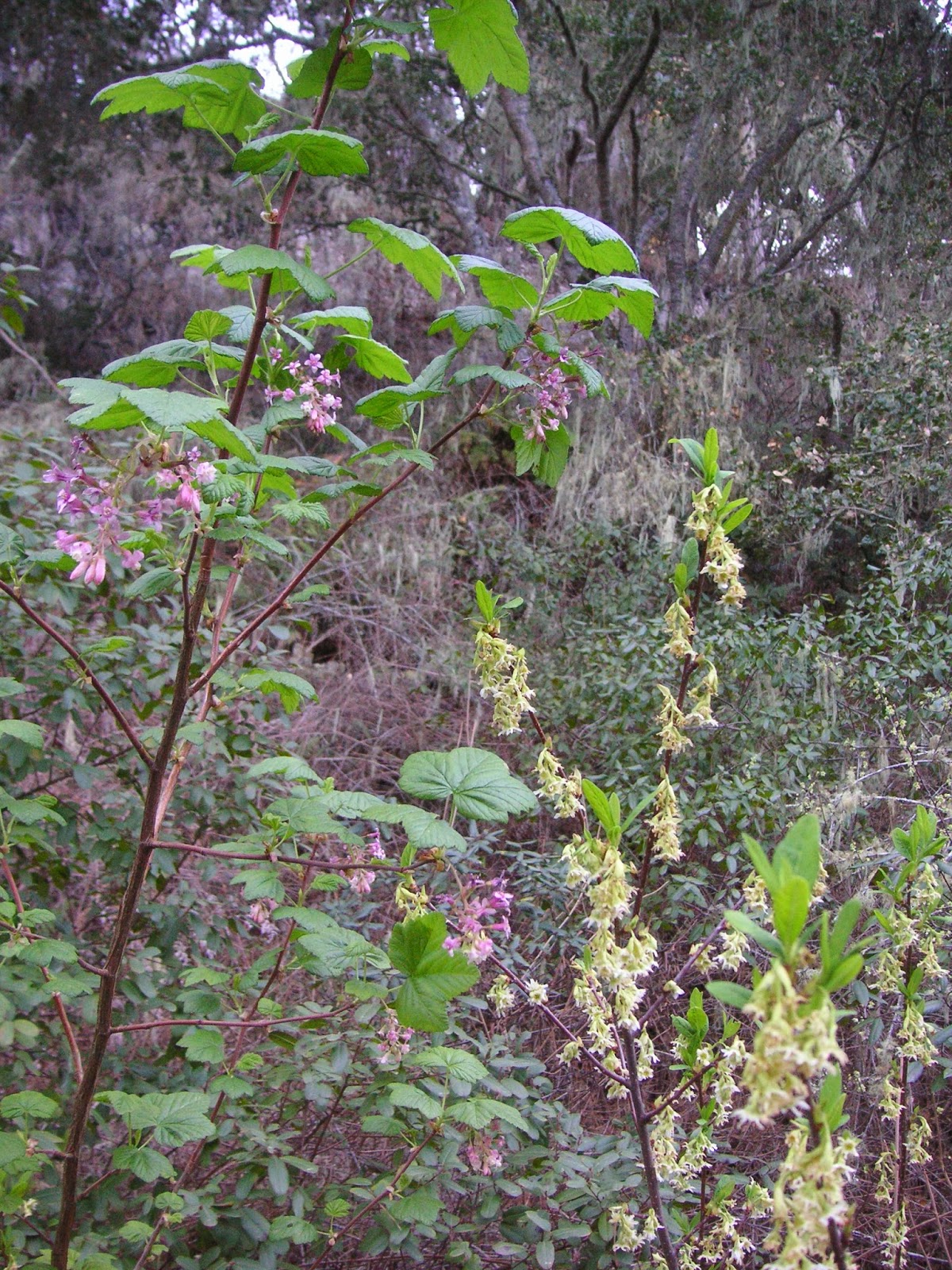
oso berry ~ 02/21/14 ~ Hatton Canyon

Rosaceae

Here's another shrub I've wanted to ID for a while.  It's delicate and pretty and one of only a handful of plants in bloom right now.  We noticed the oso berry tends to grow in the same spots as the pink flowering currant.  Oso berry is missing from the local CNPS Hatton Canyon plant list. Las Pilitas Nursery (linked in the aka above) states, "Crushed foliage smells like a green watermelon."  Oooh, I'll have to take a whiff the next time.

Saturday, December 7, 2013

toyon ~ 12/07/13 ~ Fort Ord

Rosaceae

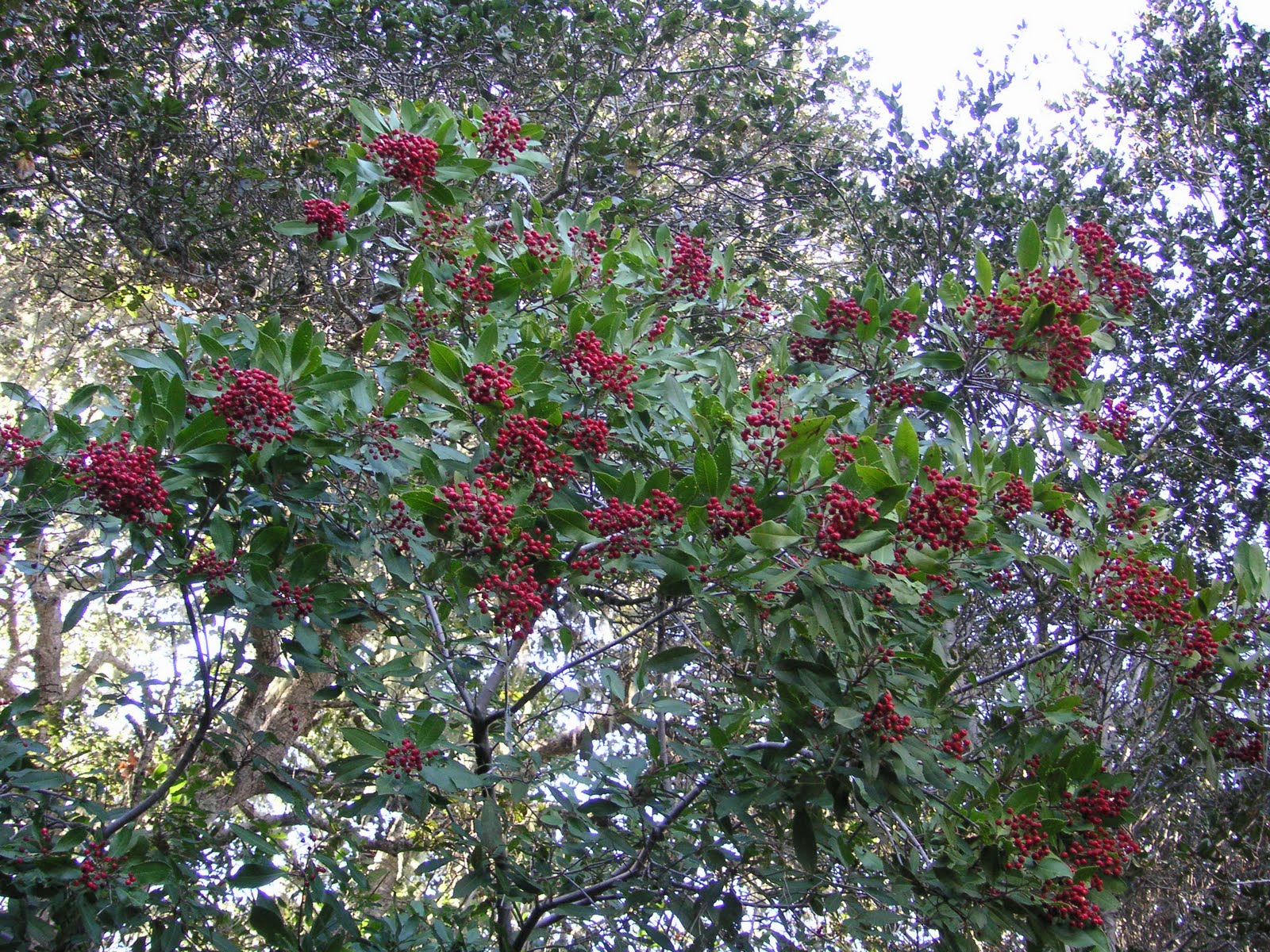
I've featured toyon on Nature ID before, but I want to show how prolific and plump the berries can get, rather than the desiccated example found in February at Garland Ranch.  It could merely be what's catching my eye lately, but the toyon does seem to be going gangbusters this year.  There are splashes of red everywhere.  About 2 weeks ago I spotted a flock of cedar waxwings at one of the State Historic Parks downtown Monterey, and I'm hoping in the next few months I'll be able to photograph them systematically stripping a toyon of all its berries like I saw for the first time last winter.

Saturday, February 4, 2012

almond blossom ~ 02/04/12 ~ Cooper Molera Garden

Rosaceae

Given my total confusion about early blooming blossoms (is it a cherry, or plum, or cherry plum?), I had no difficulty identifying this particular blossom tree. Why? Because there was a handy-dandy ID sign at the Cooper Molera Garden, which is filled with various fruit trees restored or representative of the 1860s. Really, I should be able to recognize this tree anyways, since I spent many CA winters playing underneath 2 almond trees that my dad planted next to my swing set. I used to pretend the white fallen petals were snow. Aw, fond memories!

I liked harvesting almonds with their split fuzzy hull and especially liked eating them. So, it came as a bit of surprise that I haven't liked almonds purchased at the store for a while, and I couldn't figure out why. Then, a friend recently gave me almonds from his dad's farm. They taste fresh like how I remember from when I was a kid. He said they're unpasteurized. As I was researching this post, I learned that there's now a mandatory pasteurization program for CA almonds shipped in North America. Who knew? Like with fresh apple cider, I do think some foods do taste better unpasteurized.

Saturday, January 14, 2012

blossom ~ 01/14/12 ~ Monarch Grove

blossom
Prunus sp.
Rosaceae

Blossoms in January!?! Since I started Nature ID in 2009, I have been attempting to be mindful that what I observe has its limitations, most likely based on my poor understanding of what is what, or based on when I am actually outside to observe whatever it is that strikes me as unusual, or based on my poor memory. When I first saw these blossoms, I kinda figured this year's mild winter weather must have something to do with it. Is it global warming? Maybe not. I remembered seeing a recent post by Marie at 66 Square Feet about cherry blossoms that are typical in New York City in December, a place that often gets decent snow in the winter (I've been there for work and have had flights cancelled due to too much snow, so I remember the weather well from first-hand experience). I have also commented on John at Sinbad and I on the Loose blog stating that I believe I'm noticing local flowers more this January simply because the weather is warm and I'm actually outside to see the beauty. So then, when I started writing this post and looked through my labels, I found I already have a couple posts of other ornamental blossoms in January. Hmph! Truth be told, blossoms could be about 10 days early this year, but I can't really say or proffer the cause. I now am aware that different species bloom months later like our neighbor's unidentified April blossoms, whereas our native cherry species blooms in June. It's been helpful to have the actual dated records on Nature ID to remind me of the seasonal changes, rather than relying on my fickle memory.

ps 02/11/12 - I originally posted this as cherry blossoms, but I looked at a post from last year by Katie of PhyteClub of Prunus cerasifera, commonly called a cherry plum. Ya! Now I'm confused. How can one tell the difference between cherries and plums when they're blossoming? A quick search online showed me that many other people are confused, too, even in Japan where spring blossoms are regularly celebrated. Some say look for a notch in the petals (notch = cherry, no notch = plum), the shape of the petals (oval = cherry, round = plum, or vice versa), the length of the blossom stem (long = cherry, short or none = plum), the timing of the blooms (late = cherry, early = plum), and all of these have exceptions because there are so many cultivated varieties and crosses. Erg. Two sites I found informative are Quirky Japan Blog and Japan-Guide.com.

Saturday, December 17, 2011

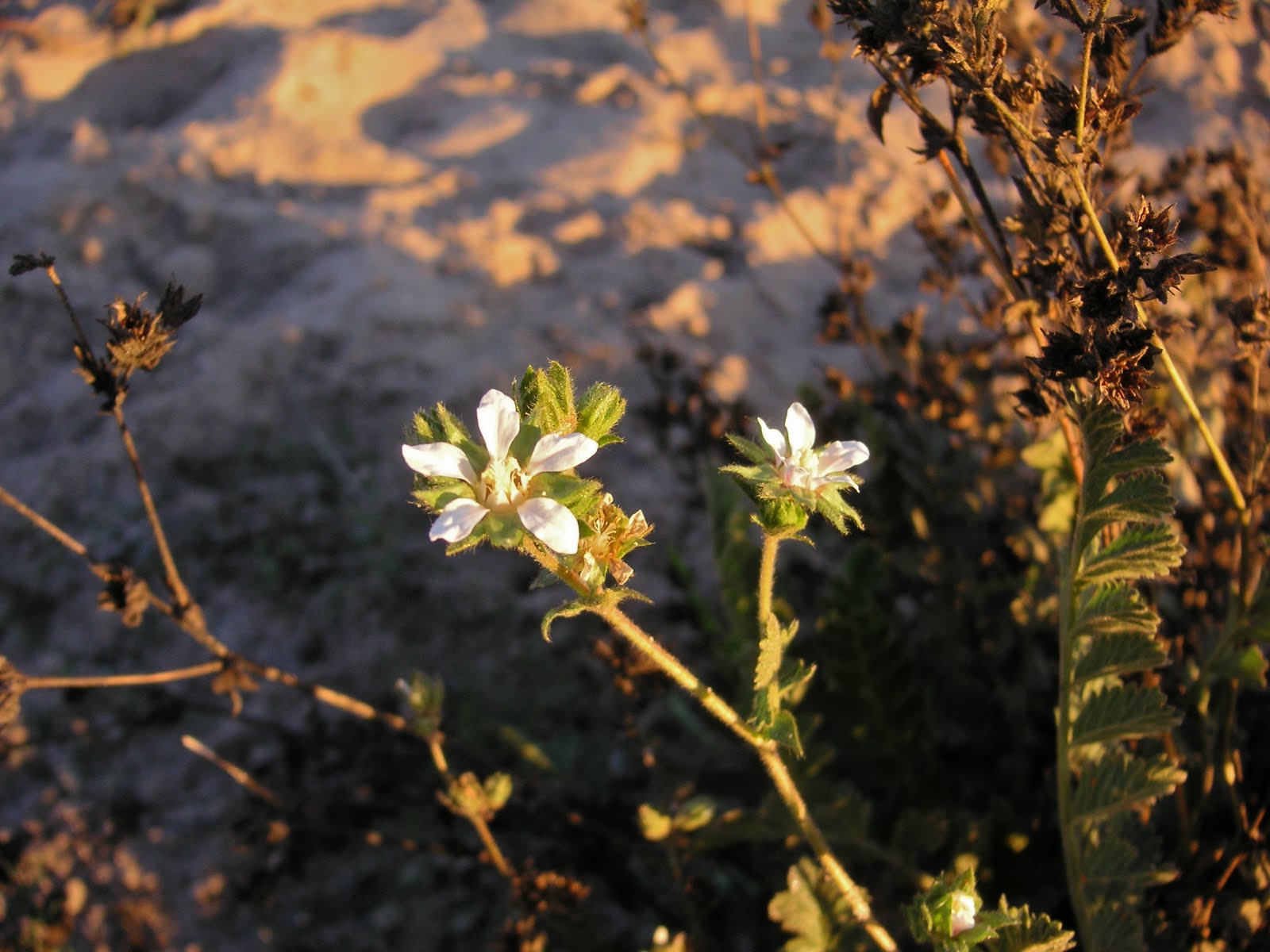
wedge-leaved horkelia ~ 12/17/11 ~ Fort Ord


Again, another fresh bloom and leaves alongside dry seeded parts from this past year. Looking back, I haven't done much hiking in December to have noticed these kinds of flowers before. Ah, I love living on the coast of CA where wildflowers can be found in winter.

Sunday, October 2, 2011

Pacific silverweed ~ 10/02/11 ~ Shoreline Park


This plant reminded me much of a yellow-flowered woodland strawberry and with the fruit somewhat similar to that of a blackberry (click the second picture to better see the berries).

You'll notice above I have an aka, also known as. I check multiple sources before I decide if it should be aka or formerly. (Haha! Prince's "Purple Rain" just popped into my head. Should he've been the artist fka Prince? Sounds bad.) I've refrained from using the botany standard syn. for synonym, because often sources simply don't agree. Indeed, Jepson even suggests Potentilla egedii var. grandis as a synonym. Aka feels more appropriate if anyone wants to do an internet search under any of the names I provide.

Thursday, July 14, 2011

thimbleberry ~ 07/14/11 ~ Garland Ranch

thimbleberry / salmonberry
Rubus parviflorus
Rosaceae

This was growing right next to Garzas Creek. Simply wanting to show off the leaves. Will have another post with flowers and fruit coming soon.

blackberry ~ 07/14/11 ~ Hopkins


Good golly! I looked at Jepson's descriptions for each species and compared hundreds of pictures. Both species are found here and I'm evenly split as to which this could be. The bright pink blooms makes me think it must be an elmleaf blackberry. However, I can't figure out the difference between "finely toothed" for elmleaf and "sharply toothed" for Himalayan. Online pictures and descriptions seem to vary widely in the amount of leaf toothiness and prickles on the stems. I can't decide. Do you know?

Friday, June 10, 2011

holly-leaved cherry ~ 06/10/11 ~ Pinnacles


Here's my first native, non-garden blossom post. Apparently holly-leaved cherries are edible. I'll have to keep my eye out for them come September and October. I find the autumn timing of this wild fruit to be interesting considering commercial cherries are the first summer fruits available. In fact, we passed numerous roadside cherry stands on our way to and from Pinnacles.

Thursday, June 9, 2011

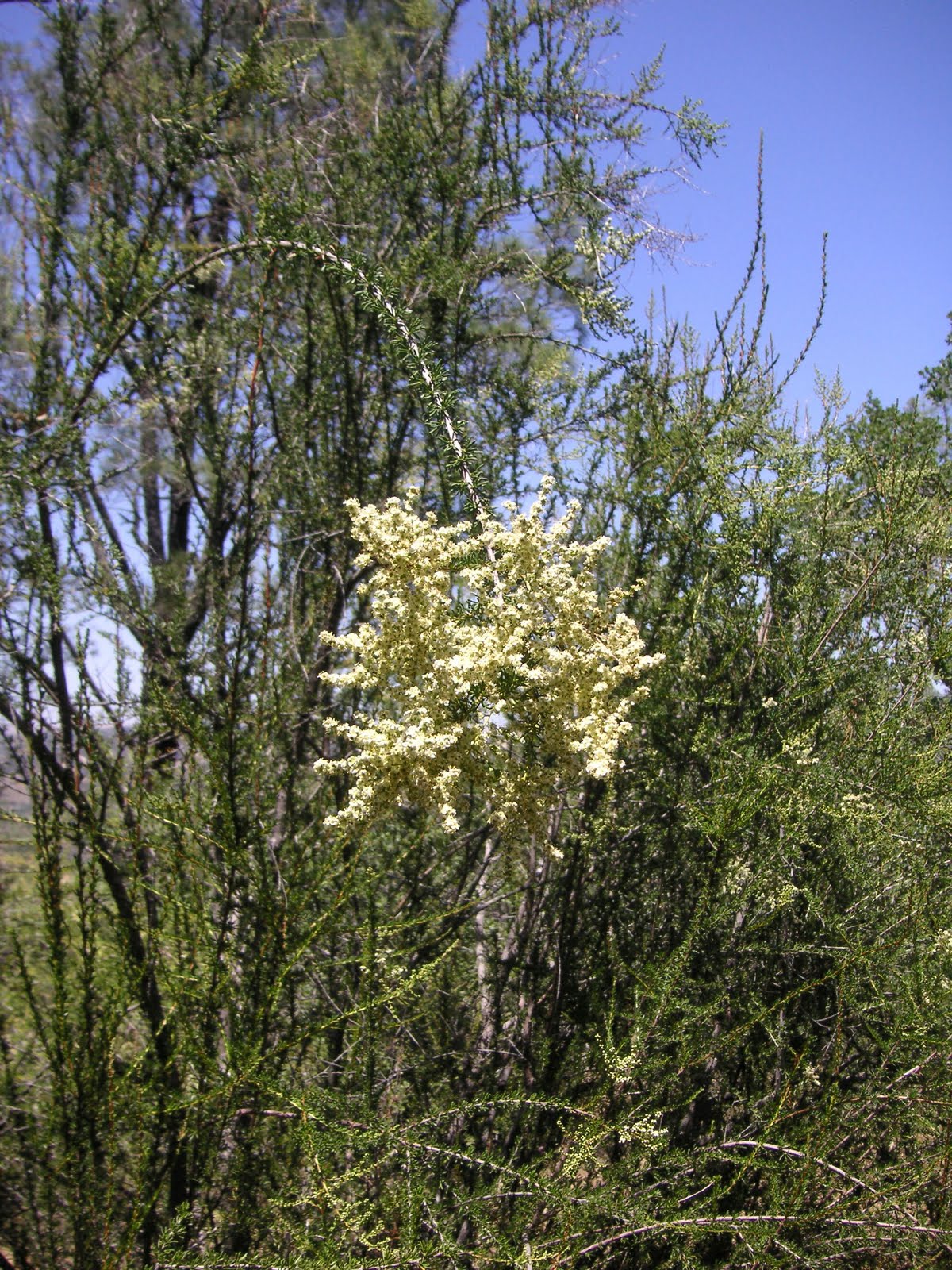
chamise ~ 06/09/11 ~ Pinnacles


I've said before that I'm not much of a shrub fan and tend to be blind to them. It usually takes someone pointing it out to me before I even notice them. It is thanks to Cindy at Dipper Ranch and her comment on a totally unrelated post about purple owl's clover that I first looked up chamise. Seriously. Now, I see it everywhere I hike - duh, of course, considering it's a dominant chaparral plant. I had to laugh at Las Pilitas Nursery's description of Bambi doing some chamise pruning.

Sunday, February 20, 2011

toyon ~ 02/20/11 ~ Garland Ranch


toyon / Christmas berry
Heteromeles arbutifolia
Rosaceae

Despite their bright red berries, I've usually ignored this plant during hikes. Quite honestly, I prefer to look for pretty spring flowers. It's thanks to fellow blogger GretchenJoanna at Gladsome Lights and her comment a couple weeks back mentioning toyon. The common name strikes me as a bit funny; I keep thinking back to those Toyota commercials with people jumping in the air, since I have a couple friends with old, beat-up, red Toyota trucks - funny how the brain works. So, when we checked out the Garland Ranch Visitor Center for a little pre-hike pit stop and to check out the current blooms (they cut flowers and place ID tags for people to see what's currently blooming), the name toyon jumped out at me. They had samples of the red berries but not the white blooms. I'll be on the look-out for the white flowers later this summer. Sure enough, the worn out red berries weren't difficult to find. To help me find toyon blooms later, I made a mental note of the finely serrated leaves and the height of the shrubs. For more information, check out Las Pilitas Nursery.

Friday, February 11, 2011

woodland strawberry ~ 02/11/11 ~ Jacks Peak


I never noticed the proliferation of strawberries at Jacks Peak before. It helps that these bright white flowers caught my eyes. I certainly have never seen the fruit there. I don't know if they get eaten by animals, collected by humans considering it's a popular public park, or rarely produce fruit since it's so shady.

As I was looking for more information, just to learn something new since I've never bothered to look up strawberries before, I was surprised to find there's a second Calflora site out there. The one I use most often, highly recommend, and link to in most of my plant scientific names is Calflora.org. The second one is Calflora.net, which is the personal site of Michael L. Charter and is based out of Southern California. Other than being a little irritated at the similarity of names, (don't know which came first as they both started in 2005), I'm highly impressed by Michael's elaborate website. Can you imagine the time it took him to create that sucker?!?

So, this got me wondering this morning (posted 02/17/11)... what the heck am I doing with this blog? And, why? It started out innocent enough as a casual "I want to learn about the things I see on my hikes." Now, first thing almost every morning (well, after a bathroom visit and a huge cup of tea), while my husband gets his beauty rest, I quietly work on Nature ID. Plus, with any free pockets of time, I'll update or add more posts, many of them backdated far enough that most followers won't even see them. I'll admit to being a bit obsessive. I'm already at 413 labels and 583 posts and I have yet to reach my 2 year blog anniversary (in May). The label lists along the right side of this blog are becoming unwieldy and extraordinarily lengthy (all that scrolling is probably why my wireless mouse eats through so many batteries). At a certain point, I imagine Google's Blogger will complain with site crashes or start charging for hosting. I don't know where this is going or how I want my blog to be in another year. I watch as several other bloggers stop adding new posts or close their accounts entirely and I suspect they simply got burned out - I still really miss Steve Wilson's Blue Jay Barrens blog. However, I do know what I do not want. I do not want to sell anything and am very proud that this is an ad-free blog. And, I do not want to "network" or show off my abysmal nature knowledge - in other words, there's something really freeing in not being the expert and being totally comfortable in saying, "I don't know." I'm relatively anti-social, hence why I like hiking to get away from people and into nature. I'm not on facebook anymore and generally refuse to join nature groups, clubs, and societies. Although, I have met some very nice people online with similar interests. My questions about the future of Nature ID remain unanswered for now.

With that said, I'd love to hear from fellow bloggers on why you blog.

Saturday, October 16, 2010

California wild rose
Rosa californica
Rosaceae

In a time of year of dried grasses and the death of non-natives (both seasonally and by the reserve's visibly apparent use of herbicides as a management tool), it was refreshing to see this native rose blooming. As I've been looking around for more information online, I found Las Pilitas Nursery description to be particularly entertaining and perhaps a bit uncouth. And for a touchy-feely link recommendation, Friends of Edgewood has an interesting post. I'm still looking for information on how to prepare fresh rose hips for tea. As a start, I thought this was a good post at Golden Gate National Parks Conservancy. I'd love to get suggestions.

Tuesday, June 8, 2010


Himalayan blackberry
Rubus armeniacus

Rosaceae

This blackberry seems to have an identity issue; it is also known as R. discolor and R. procerus. I don't understand the need to change scientific names like this. The flowers are very pretty.

Wednesday, April 7, 2010

blossom ~ 04/07/10 ~ at home

unknown flowering fruit tree
outside our bathroom window
Rosaceae

This tree was already blooming April 2 when we returned home from Rome. I believe it's strictly an ornamental as I've never seen any fruits from it. Based on last year's pic, dated April 21, 2009, and our anniversary hike at Garland, I'm guessing the blooms all around are early this year.

ps 02/11/12 - After reviewing all my blossom posts, I'm starting to suspect this may be an apple tree, with very small apples. The blooming time seems about right. The ground squirrel that likes to sit on the rocks outside our Bay facing windows frequently munches on small apples in late autumn and early winter. We've wondered where it gets its apples, because other than this tree there are no blooming fruit trees around the park.

Sunday, January 24, 2010

blossom ~ 01/24/10 ~ Monterey

blossom
Prunus sp.
Rosaceae

Seeing the bright pink around here, reminds me it's ready to be spring. Notice the fall leaves still on the tree in the background of the first picture?

Tuesday, May 5, 2009

roses
Rosa sp.
Rosaceae

I've been so intent on looking for wildflowers that I've overlooked some beauties right next door. Many people in town have gorgeous roses in their yards, IF they can figure out a way to keep the deer away.